Tag: Scarborough

  • A year later, progress on Canongate Trail

    IMG_8531-001
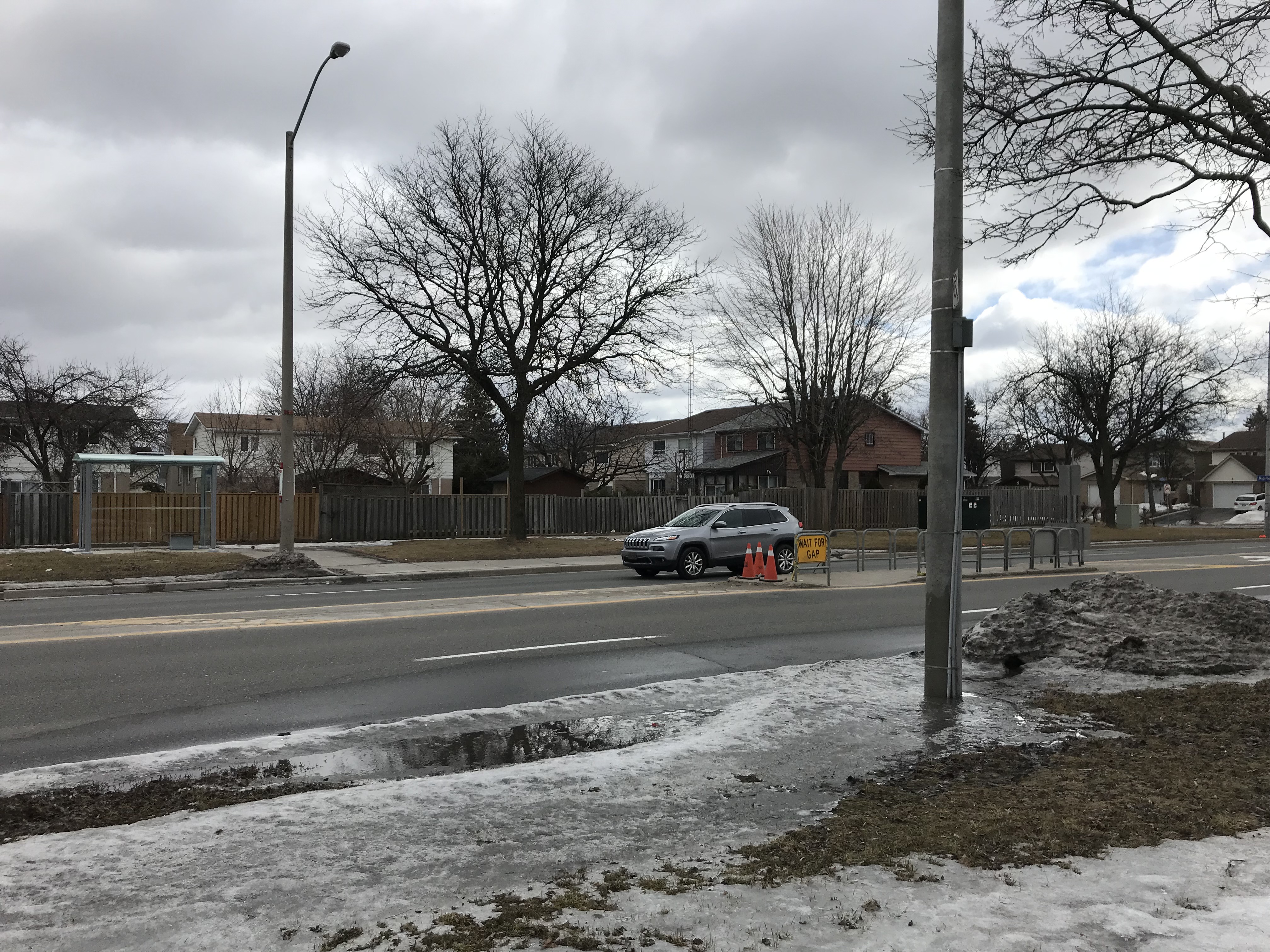
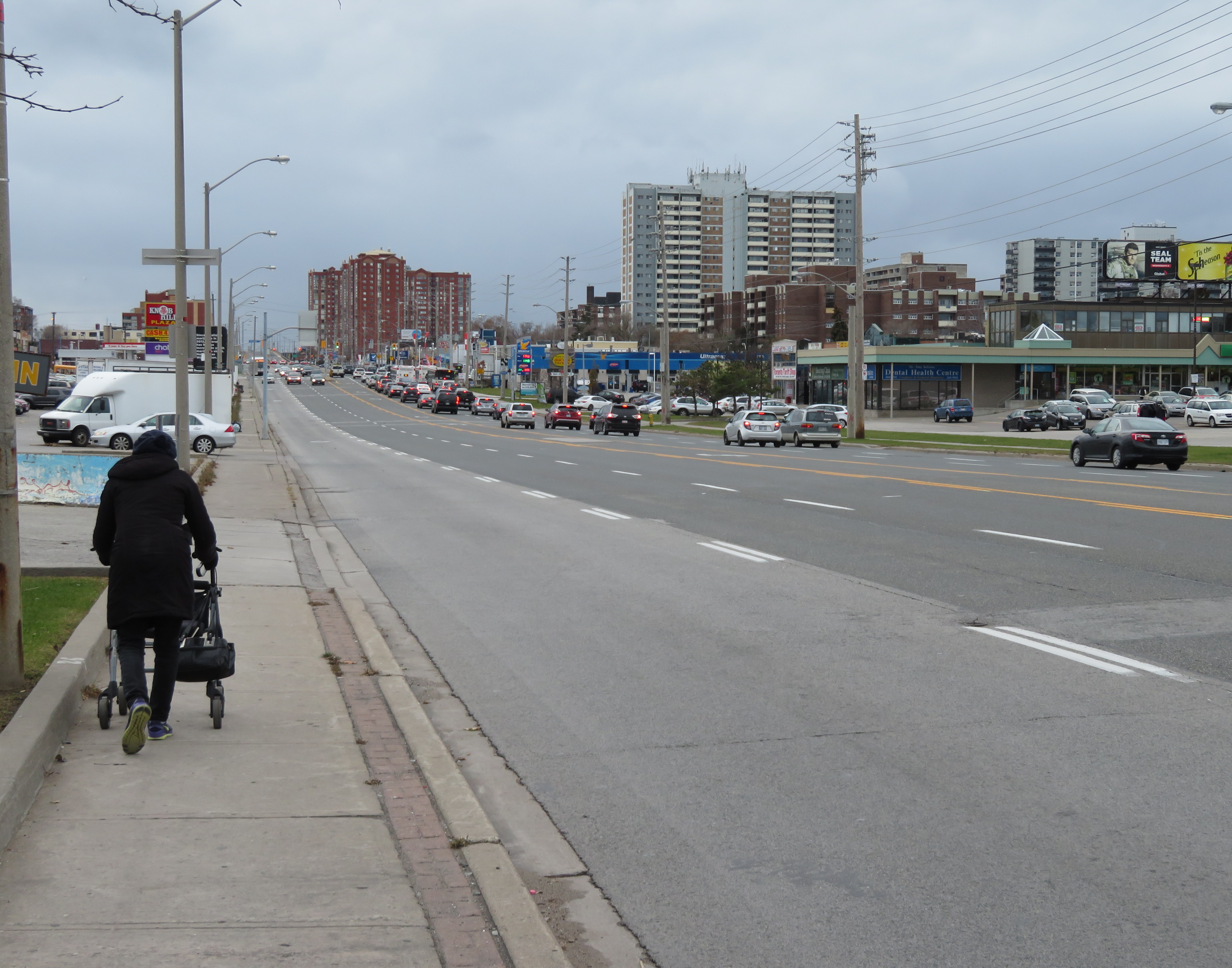
    Canongate Trail, February 2019

    In February 2018, Duncan Xu, an 11-year old boy, was struck and killed crossing a residential street in North Scarborough on his way home from school. He was one of forty-two pedestrians unintentionally struck and killed by motorists in Toronto last year.

    Not long after Duncan’s death, I visited the neighbourhood and wrote about the tragedy.  Canongate Trail, where Duncan was struck, is a two-lane residential street. At the time, there were no traffic calming measures in place to slow down motorists, many of whom used Canongate as a shortcut around the busy intersection of Kennedy Road and Steeles Avenue. The local councillor, Jim Karygiannis, decided to unilaterally close a walkway linking the rear schoolyard with Canongate Trail, close to where Duncan was killed. Duncan used the walkway before he tried to cross the street.

    Since then, more permanent fixes were made. At the request of Karygiannis and local residents, city staff studied both reducing speed limit and installing traffic calming measures. While staff recommended reducing the speed limit to 30 kilometres an hour, they concluded that traffic calming measures such as speed humps were unwarranted.

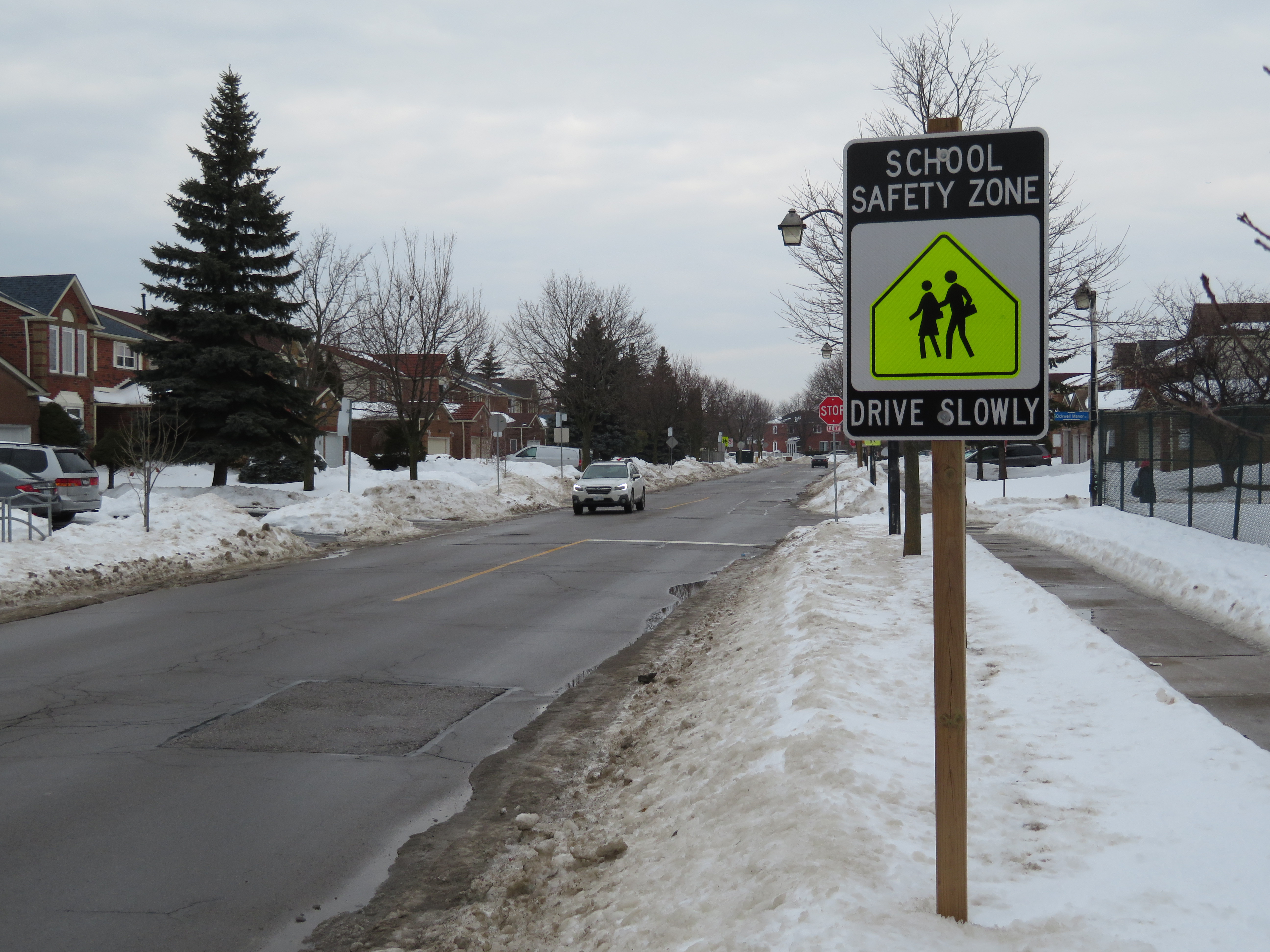
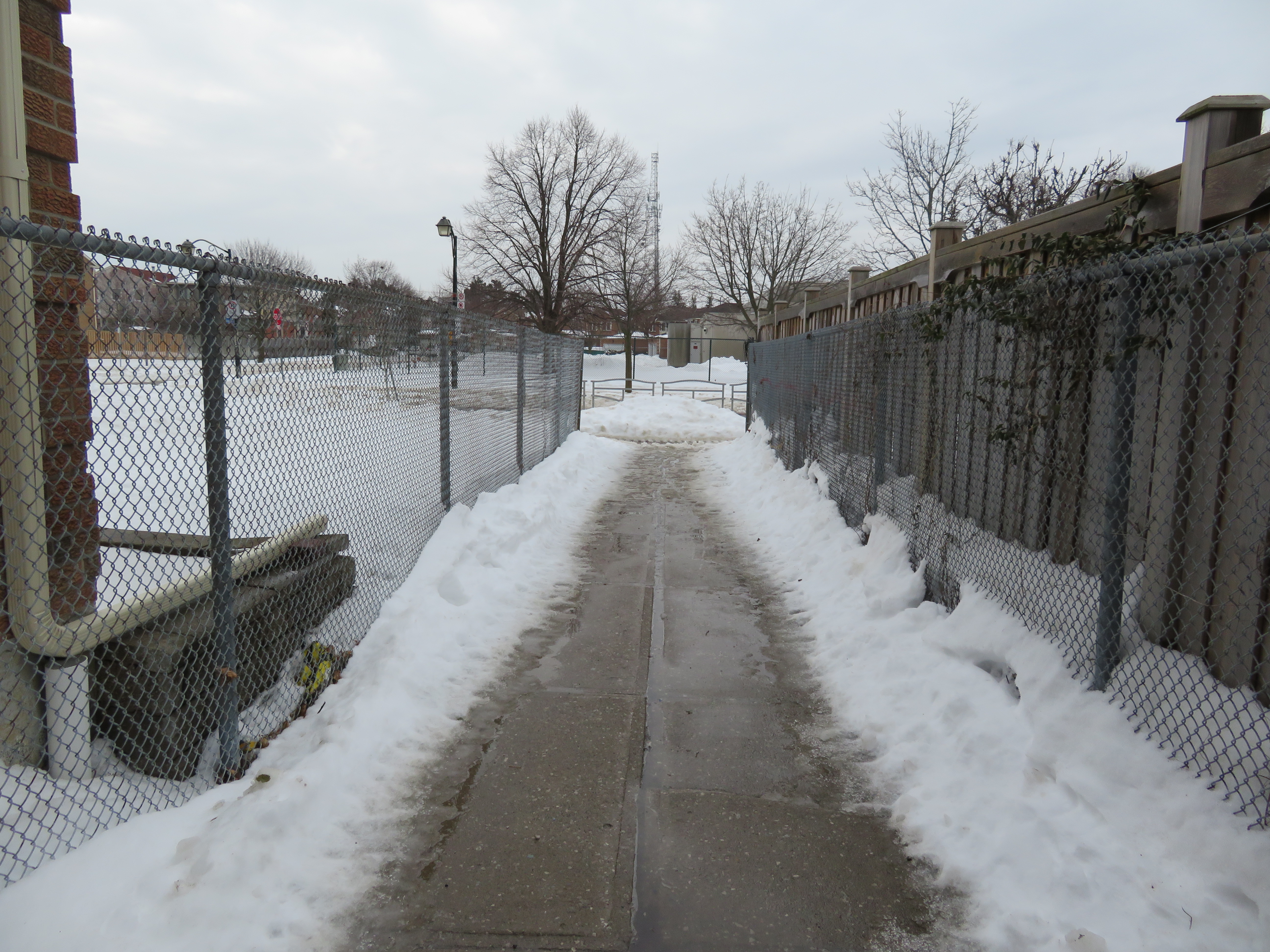
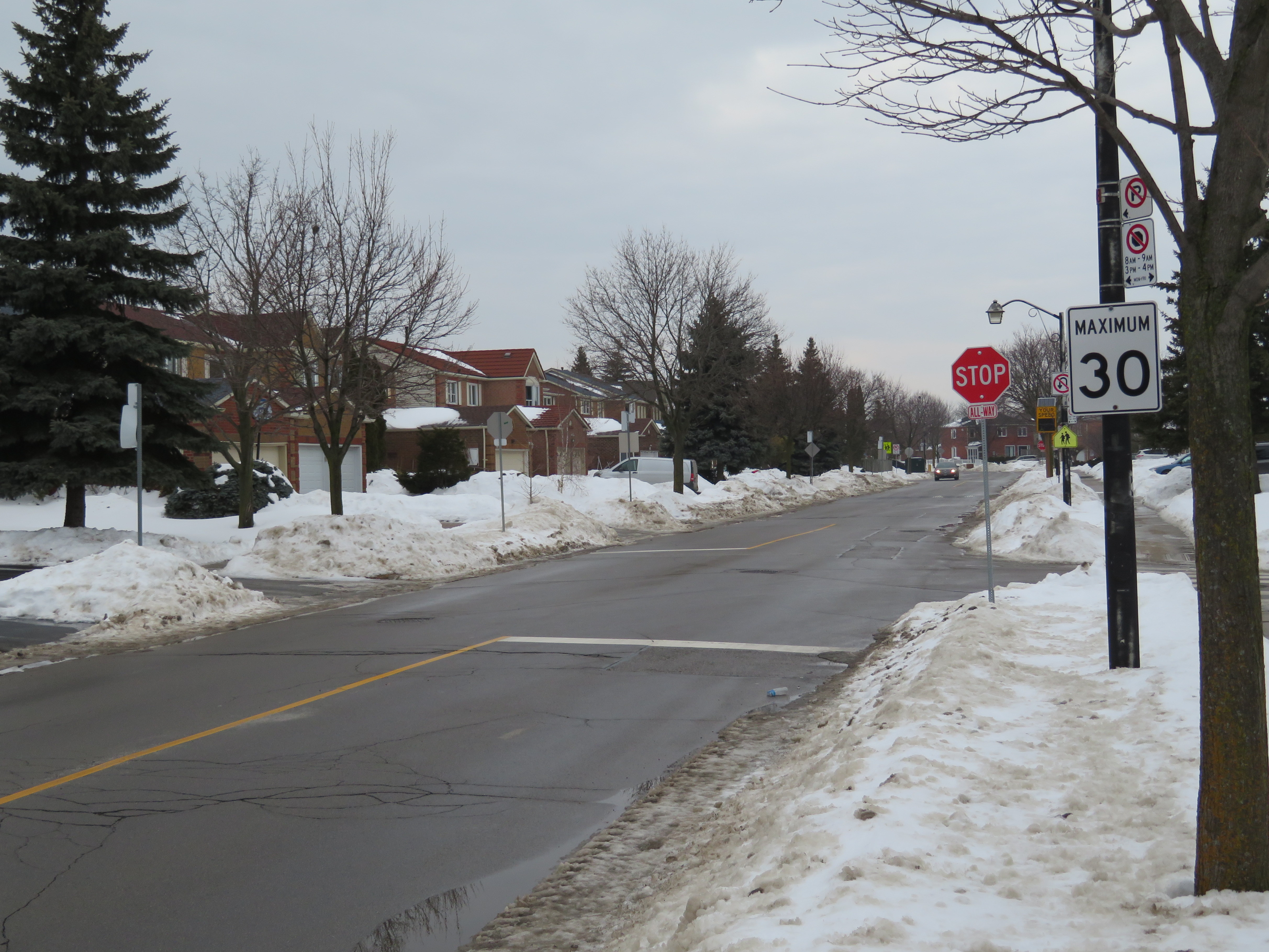
    The speed humps were added anyway, along with other measures. A new all-way stop was added at Ockwell Manor Drive, near where the walkway meets the Canongate Trail sidewalk. Beyond the point where the walkway meets the sidewalk, fencing was installed to discourage children from running into the street. These are significant improvements.

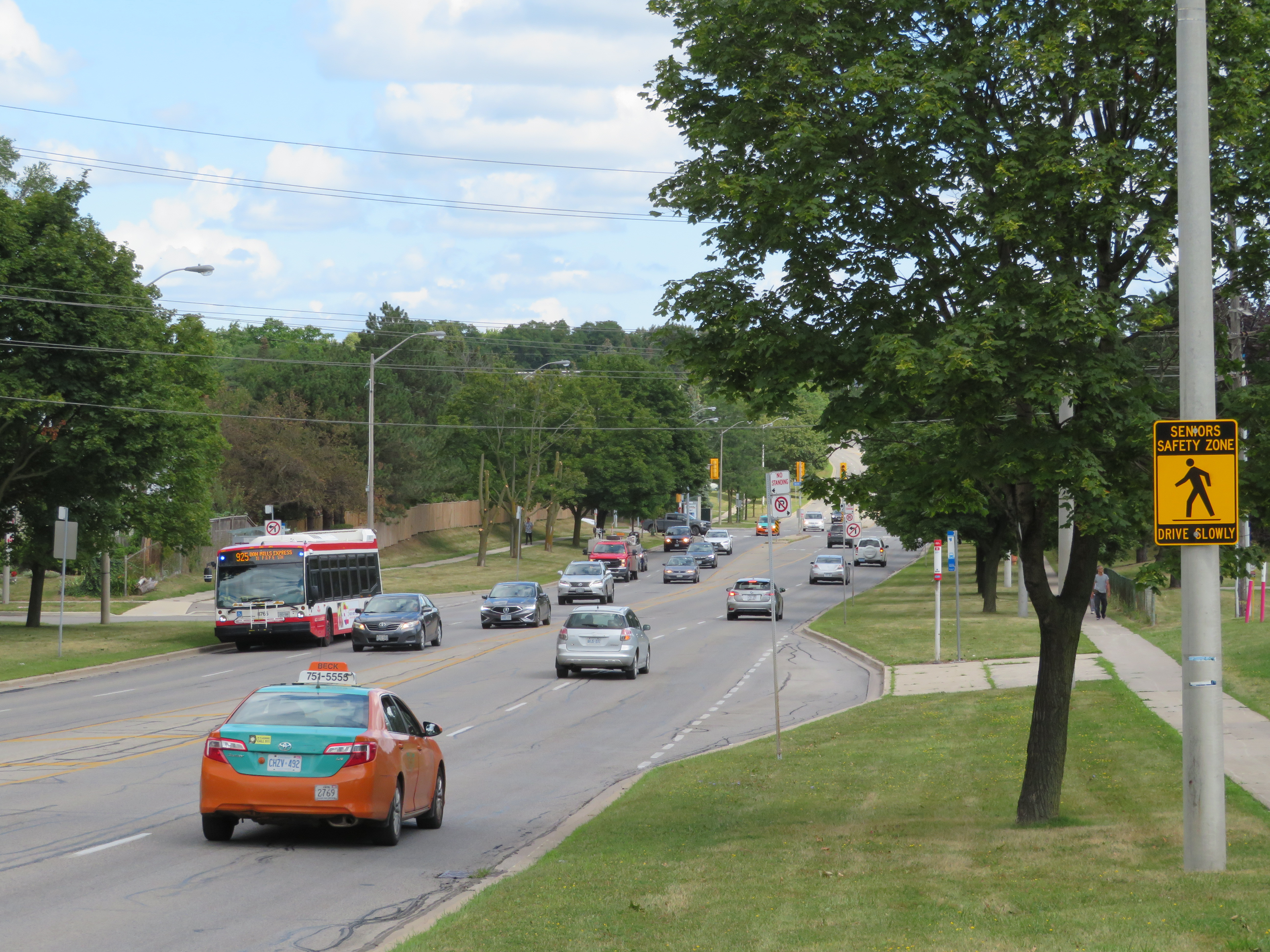
    IMG_8530-001The walkway to the school and a nearby park is reopened, with a metal barrier between the sidewalk and the roadway
    Still, more can always be done. Curb extensions or bulb-outs at intersections would be another effective traffic calming measure, narrowing the roadway, slowing down turning vehicles, and increasing pedestrian visibility while reducing pedestrian crossing distances.

    What’s most disheartening though is that it took a young child’s death for these measures to happen. All residential streets should have a 30 km/h limit and streets designed to slow motorists down, including measures such as curb extensions and speed humps. As with the “Slow Down – Kids at Play” lawn sign campaign, action only comes after a high-profile tragedy. Even then, it’s not enough.

    It’s good to see progress on Canongate Trail. But this should be the standard everywhere. We can and should do better in Toronto if we are all serious about implementing a true Vision Zero policy.

    IMG_8535-001New 30 km/h speed limit and a new stop sign on Canongate Trail, February 2019
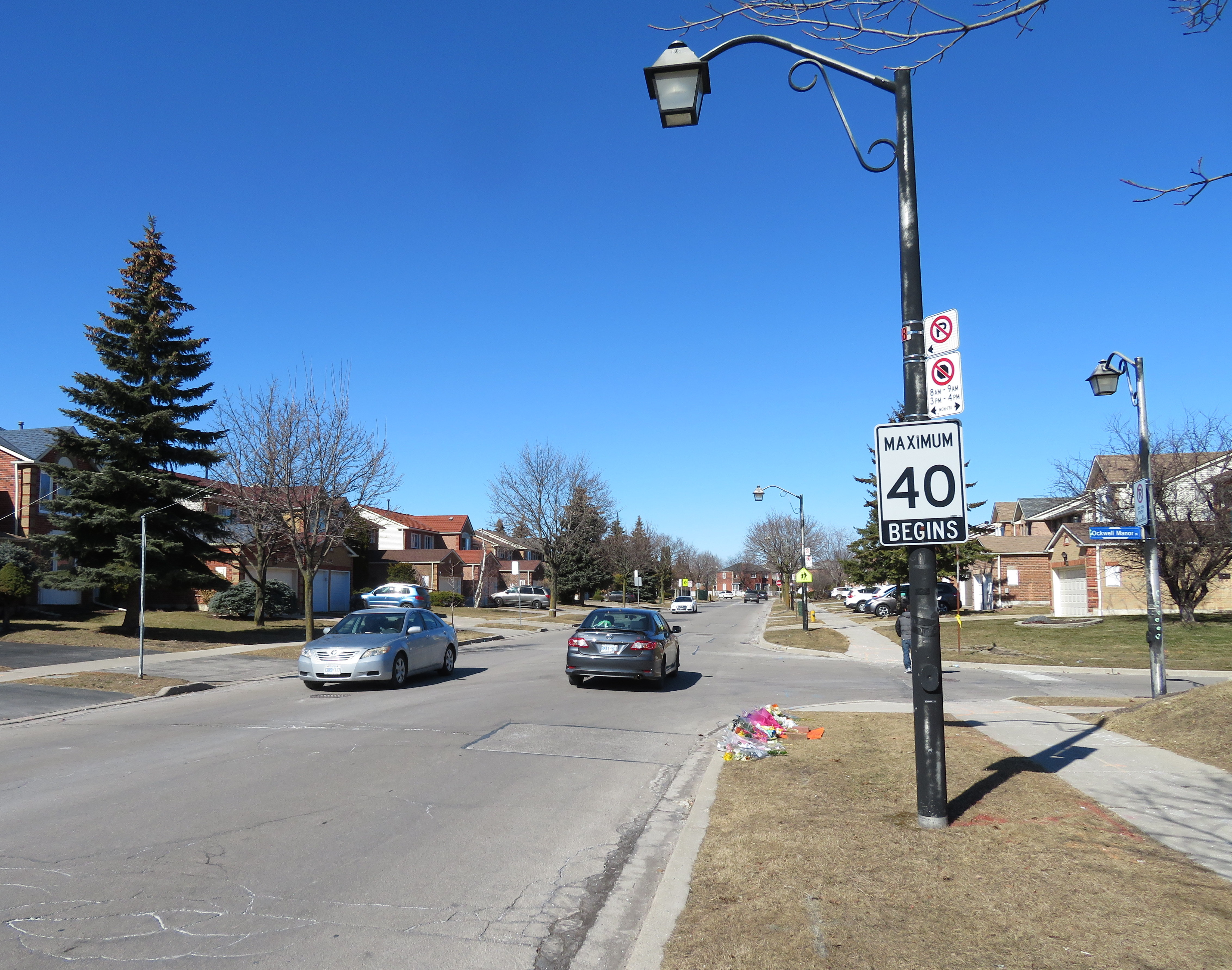
    IMG_6027-001What Canongate Trail looked like in March 2018
  • The Scarborough Six: mapping the results of the 2018 election

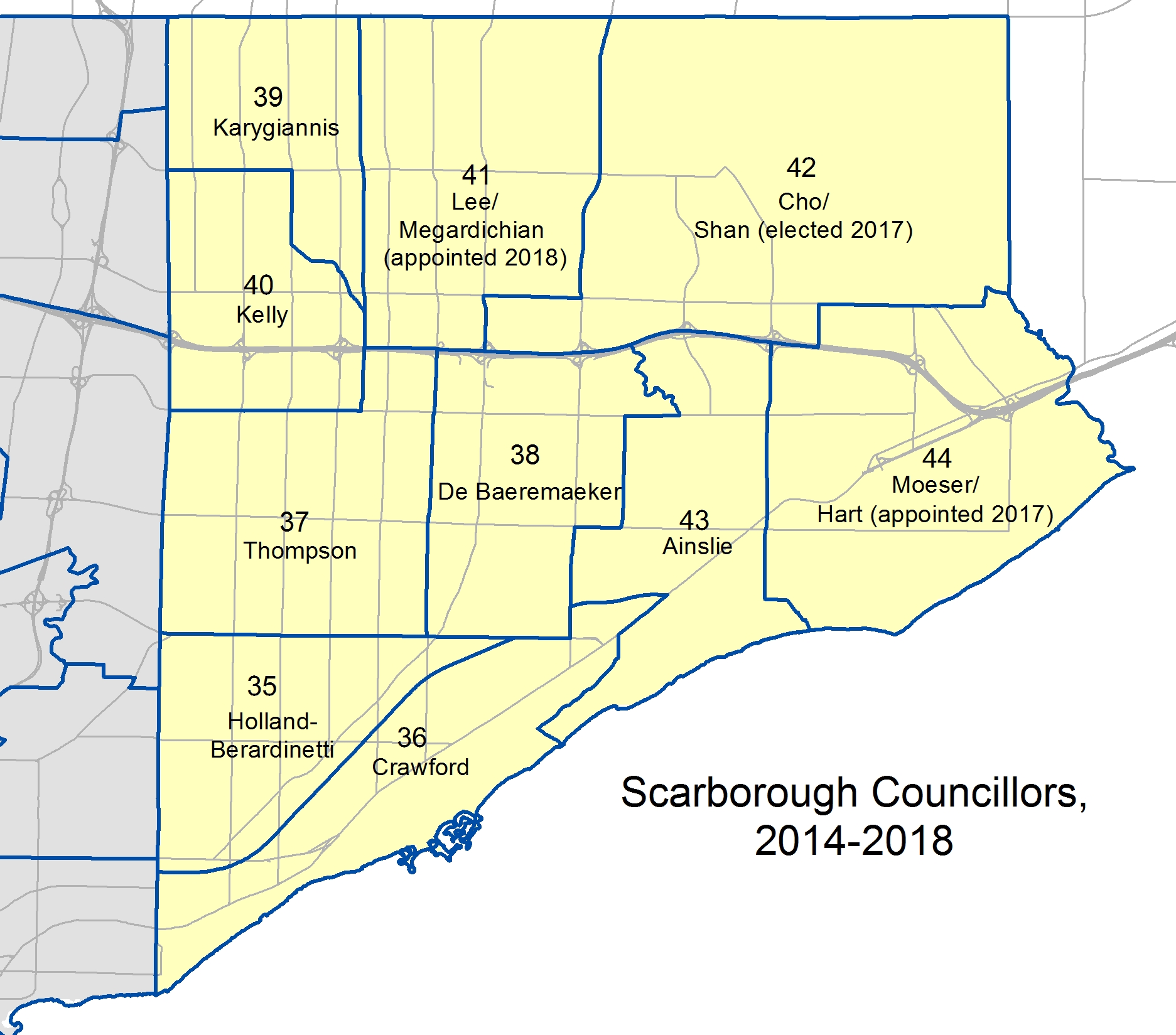
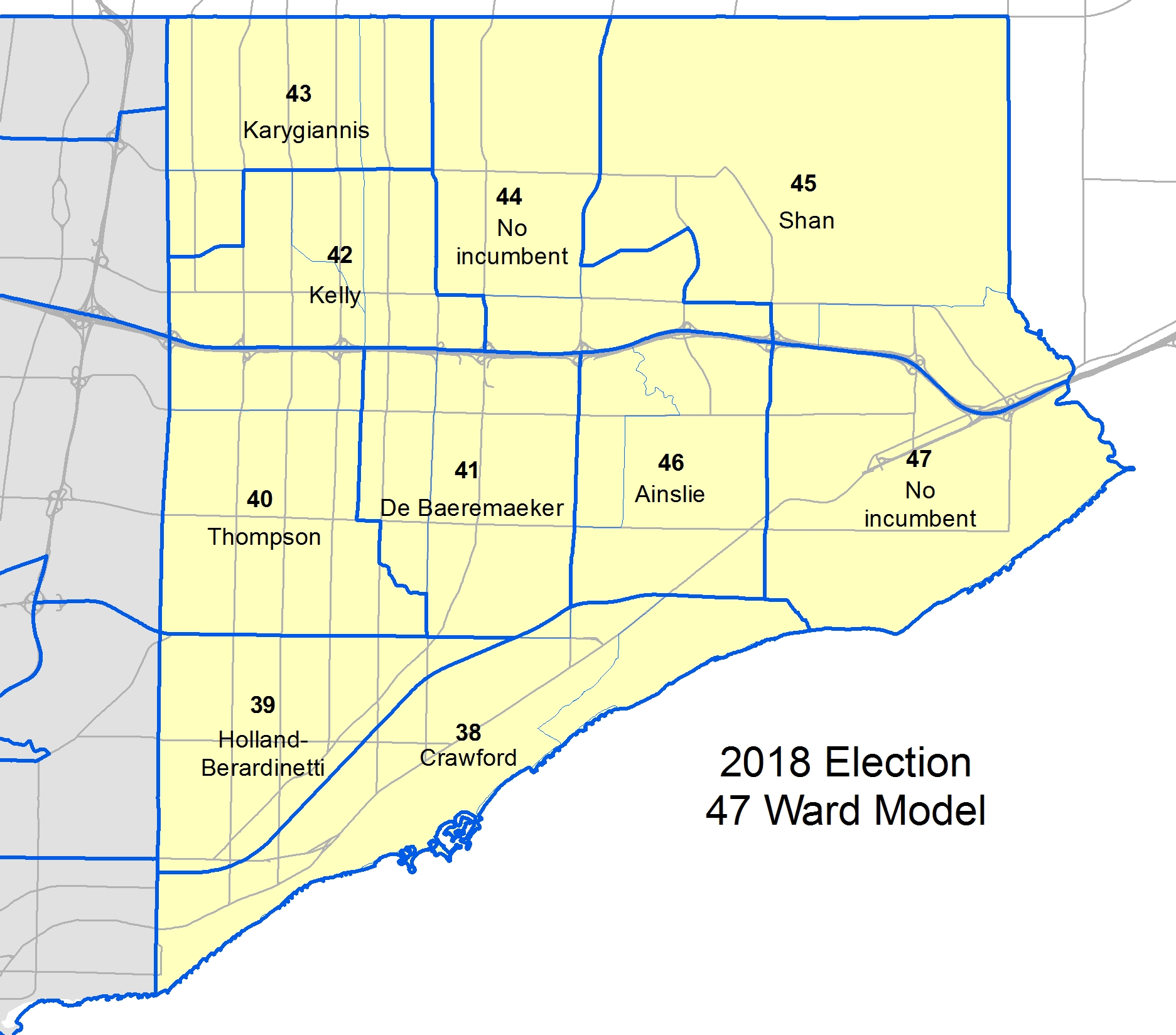
    In 2014, Scarborough elected ten city councillors. Since that election, one councillor, Ron Moeser, died in office, while two others, Raymond Cho and Chin Lee, resigned to run for provincial office. Cho, representing the Ontario PCs, was successful, while Lee, running for the Liberals, was not. Neethan Shan was elected in Ward 42 in a by-election to fill Cho’s seat. Jim Hart was appointed in Ward 44 by council after Moeser’s death, and Miganoush Megardichian was appointed in Ward 41.

    With the new 47 ward model approved by city council for the 2018 election, Scarborough was allocated the same number of wards, though boundaries shifted to reflect changes in population. Two of the new wards – 44 and 47 – had no incumbent running, opening those wards up to new voices.

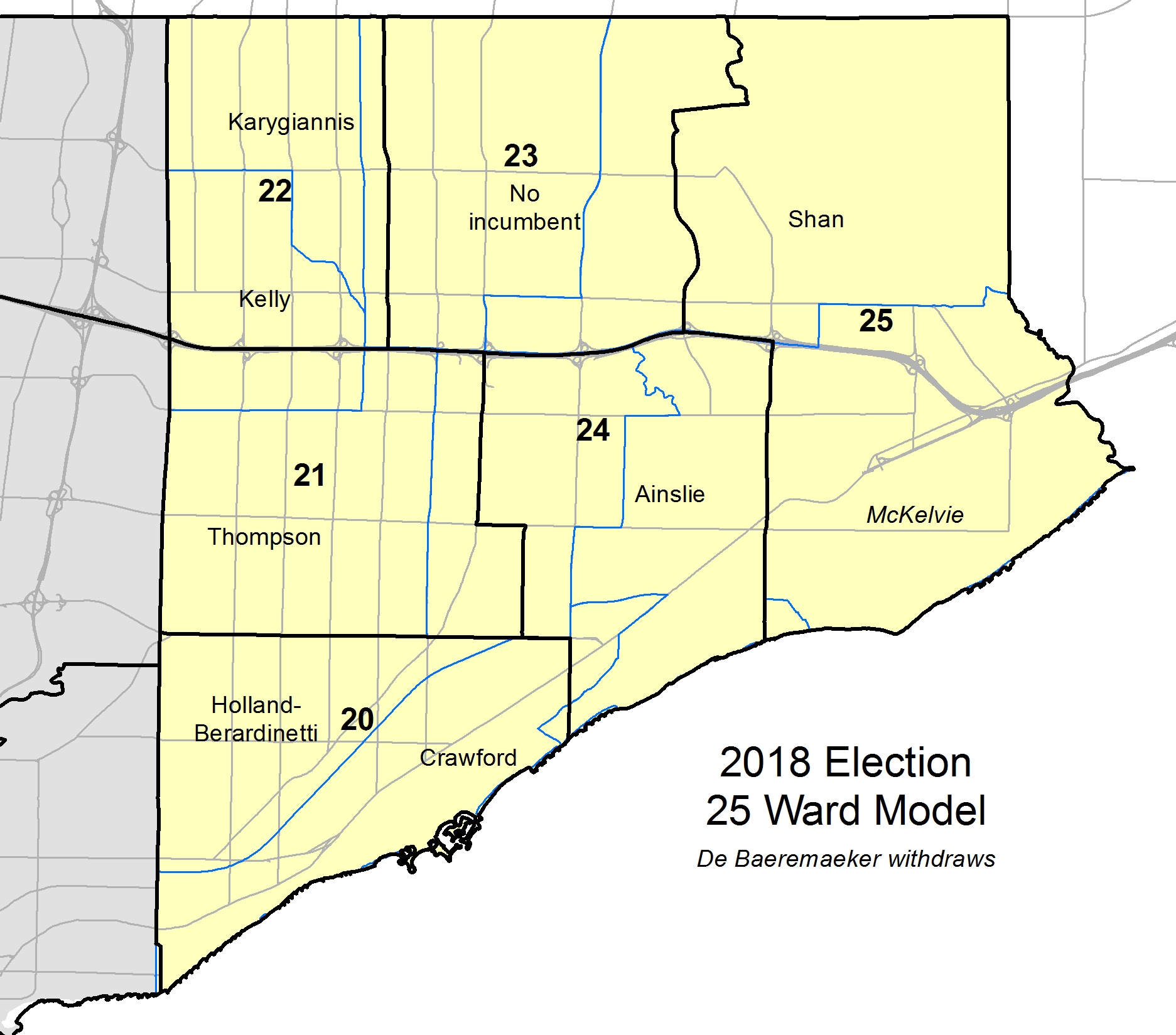
    With Premier Doug Ford’s move to cut city council to just 25 wards, Scarborough went down to just six wards. In Wards 20 and 22, incumbents faced off against each other. Councillor Glenn De Baeremaeker, famous for his support of the Scarborough subway extension, decided that the odds were against him and withdrew his candidacy. De Baeremaeker’s old ward was cut in half and redistributed evenly to new Wards 21 and 24. Had he decided to run again, it would have meant running against fellow council veterans Michael Thompson or Paul Ainslie, both of whom had a geographic advantage in not losing any of their former territories.

    I previously mapped the results in Ward 22, where Jim Karygiannis defeated Norm Kelly, Ward 23, where conservative businesswoman Cynthia Lai won, and Ward 25, where Jennifer McKelvie defeated incumbent Neethan Shan.

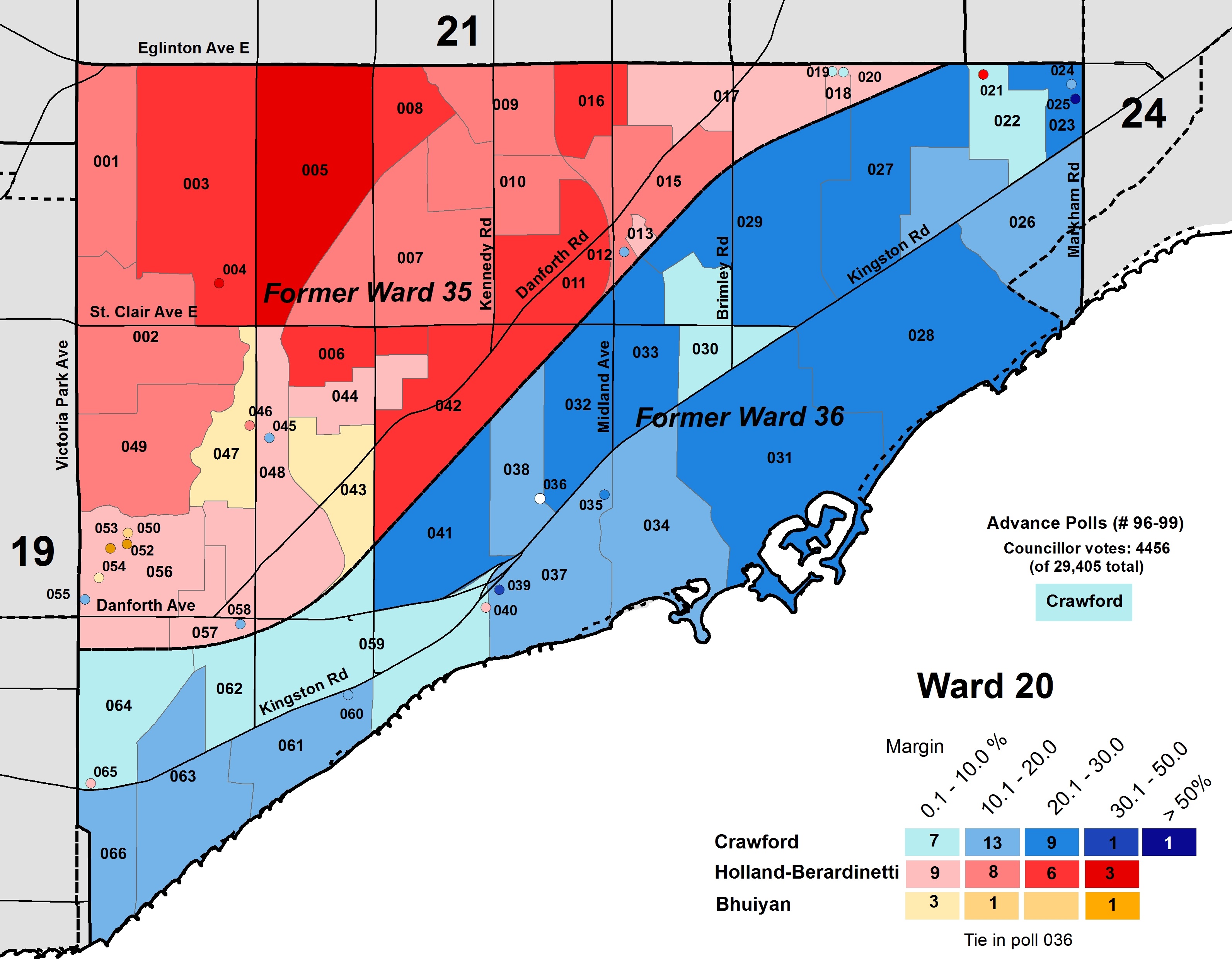
    Of the remaining three races in Scarborough, only Ward 20 was interesting. There, incumbents Michelle Holland-Berardinetti and Gary Crawford ran against eight challengers. In Wards 21 and 24, Councillors Thompson and Ainslie won with over 65 percent of the vote and nearly every poll. I did not map the results of those two races.

    Ward 20

    Ward 20 saw two right-leaning councillors, Gary Crawford and Michelle Holland-Berardinetti face off against each other. Both were reliable Tory allies; Crawford served as budget chief under both Rob Ford and John Tory, while Holland-Berardinetti was council’s innovation advocate.

    Crawford was first elected in Ward 36 in 2010 after serving as public school trustee. He previously ran for the provincial Progressive Conservatives in 2007. Ward 36, whose southern boundary was Lake Ontario, was Scarborough’s most affluent ward and included the Scarborough Bluffs. Holland-Berardinetti, the spouse of former Liberal MPP Lorenzo Berardinetti, was also first elected in 2010, representing Ward 35. Both councillors were re-elected by wide margins in 2014.

    Bill 5 resulted in Wards 35 and 36 merging, with only a small part of old Ward 36 shifting to new Ward 24. The number of voters in each of the two former wards was almost equal, but Crawford won a very a tight race; only 411 votes separated the two incumbents.

    Though Mohsin Bhuiyan originally registered to run against Crawford in the 47-ward model, he placed first in five polls in former Ward 35, in the Dentonia Park and Scarborough Junction neighbourhoods. He placed third overall, with 10 percent of the vote, but he drew more votes from Holland-Berardinetti than from Crawford. Suman Roy, a food advocate endorsed by the Toronto Star and NOW Magazine, was only able to get 5.4 percent of the vote, coming in fifth.

    2018 Election - W20.jpg

    Ward 20 Scarborough Southwest
    Candidate Votes Percent
    Gerard Arbour 1,187 4.0
    Mohsin Bhuiyan 2,910 10.0
    Paulina Corpuz 1,813 6.2
    Gary Crawford 10,505 35.7
    Michelle Holland-Berardinetti 10,094 34.3
    John Letonja 160 0.5
    Robert McDermott 367 1.3
    Suman Roy 1,582 5.4
    Curtis Smith 541 1.8
    Bruce Waters 246 0.8

    Ward 21

    Michael Thompson was first elected to Toronto City Council in 2003. In the 2014 election, he won with over 80 percent of the vote. In the larger new ward, the share of the vote fell to 69 percent. While he’s a thoughtful conservative and a good constituency councillor, Thompson also supported Doug Ford’s unilateral cut to city council.

    Ward 21 Scarborough Centre
    Candidate Votes Percent
    Paul Beatty 1,638 6.8
    Vivek Bhatt 993 4.1
    Fawzi Bidawi 1,035 4.3
    Zia Choudhary 1,014 4.2
    Randy Bucao 949 4.0
    Ismail Khan 311 1.3
    Arfan Naveed 349 1.5
    Raphael Rosch 545 2.3
    Nur Saifullah 132 0.6
    Michael Thompson 16,542 69.1
    Zamir ul hassan Nadeem 448 1.9

    Ward 24

    Paul Ainslie was first elected to Toronto City Council in 2006, after being appointed to council in a neighbouring ward in 2005. A principled centrist, Ainslie served on Tory’s executive committee and was re-appointed in 2018. Ainslie won in 2018 with two-thirds of the vote in Ward 24, placing first in all but three polls.

    Ward 24 Scarborough-Guildwood
    Candidate Votes Percent
    Paul Ainslie 15,131 66.8
    Itohan Evbagharu 132 0.6
    Reddy Muttukuru 1,323 5.8
    Priyanth Nallaratnam 1,896 8.4
    Keiosha Ross 405 1.8
    Sajid Saleh 841 3.7
    Michelle Spencer 1,933 8.5
    Emery Warner 393 1.7
    Morlan Washington 592 2.6
  • Mapping the council races in Ward 22 – Scarborough-Agincourt and Ward 23 – Scarborough North

    I continue the mapping of Toronto’s 25 council races by taking a look at two Scarborough wards.

    Ward 22, Scarborough-Agincourt, was a battle between two right-leaning incumbent councillors, Norm Kelly and Jim Karygiannis. Ward 23, Scarborough North, was one of only two wards that didn’t have a councillor running for re-election.

    Ward 22

    Ward 22, Scarborough North, pit 77-year old council veteran Norm Kelly against 63-year old council rookie Jim Karygiannis. They share similar politics (both are centre-right councillors, and both are former Liberal MPs), but have different styles. Ward 22 is bounded by Victoria Park on the west, Midland Avenue on the east, Highway 401 on the south, and Steeles Avenue on the north.

    Norm Kelly was first elected to municipal politics in 1974 as an alderman on Scarborough council and a Liberal MP between 1980 and 1984. He returned to Scarborough council in 1994 and has served on Toronto City Council since the 1997 amalgamation, and was a reliable ally on council for mayors Mel Lastman and Rob Ford.

    Under Mayor Ford, Kelly was named deputy mayor in August 2013, only a few months before council stripped Ford of most of his powers as his personal scandals deepened. Kelly assumed most of the mayor’s responsibilities and served admirably.

    Despite his personal popularity and his right-leaning credentials, Kelly was left outside new mayor John Tory’s inner circle. Instead, Kelly, who became better known as “@norm” spend his time boosting his social media presence, getting into Twitter spats on behalf of rapper Drake, and pitching merchandise. His millennial-baiting “6 Dad” act was cute for a short time, but became increasingly irritating, especially as his hip social media presence contrasted with his conservative politics and his denial of climate change.

    Jim Karygiannis was a Liberal MP from 1988 to 2014, and had a reputation as a socially conservative Liberal. Despite being a sitting MP, he chose to resign and run for city council, perhaps feeling out of place in a more socially progressive caucus. Karygiannis’ first term on council was unremarkable, but he is known as a community-oriented councillor, responsive to local needs (though I very much disagreed with his response to the death of a young boy in his ward after he was struck by a car on a residential street earlier this year).

    Kelly was disadvantaged by the fact that part of his old ward, Ward 40, was not included in the new Ward 22 (the area south of Highway 401 and north of Ellesmere Road), while the entirety of Ward 39, Karygiannis’ turf, was part of the new ward. On the east side, the boundary shifted slightly eastward, from the GO rail corridor to Midland Avenue.

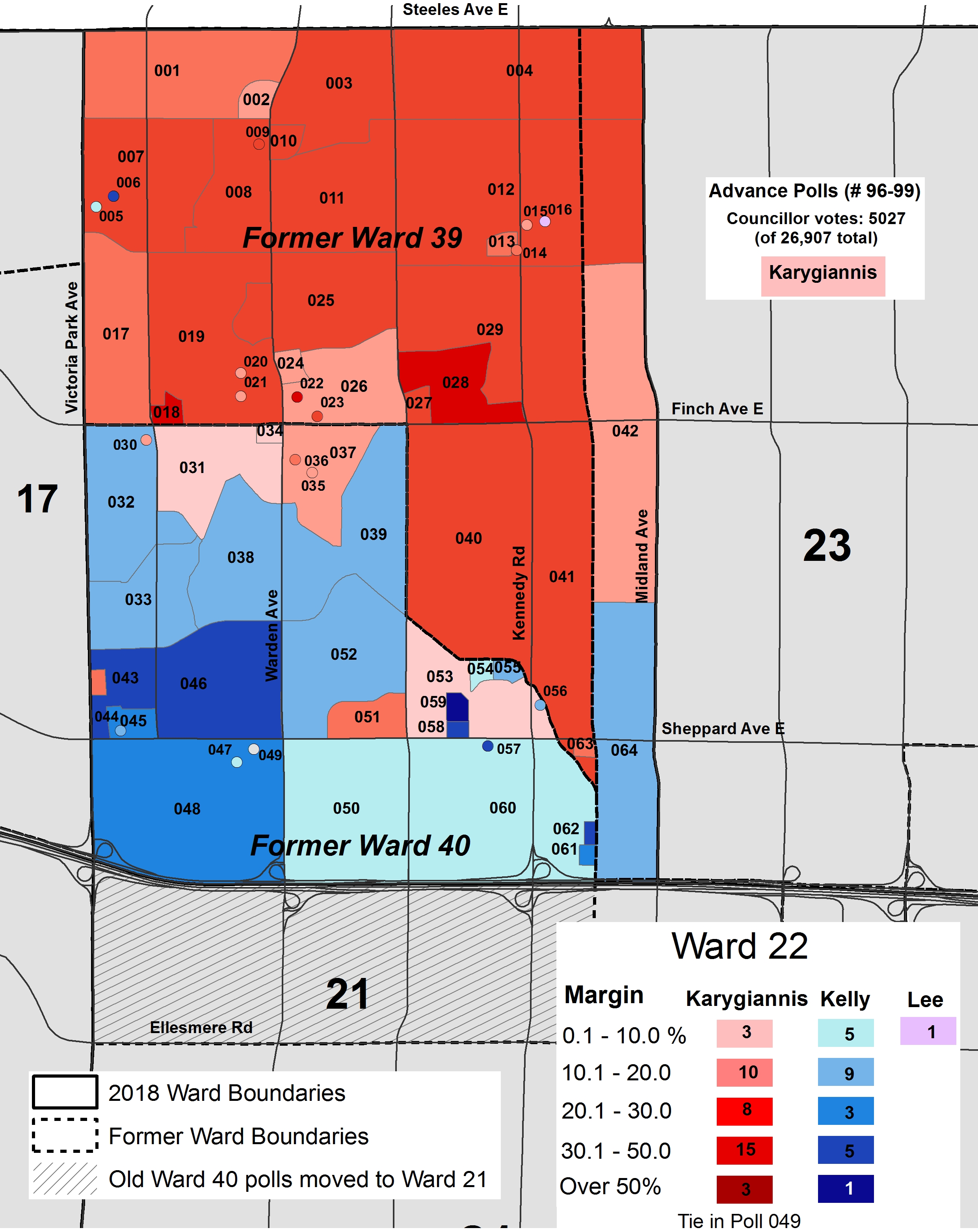
    In the end, Karygiannis won with 46.8 percent of the vote to Kelly’s 37.0 percent. Karygiannis placed first in all but three polls in former Ward 39, and also 9 polls on Kelly’s old turf. The “6 Dad” finally got his long-overdue retirement.

    2018 Election - W22
    Poll-level map for Ward 22


    Ward 23

    Ward 23 was one of only two council races that didn’t have a councillor seeking re-election (the other was Ward 19). Chin Lee, who represented the area for many years, resigned early this year to run for provincial office as a Liberal, and was replaced by an appointed councillor. Though Lee lost, he did not seek a return to municipal politics, unlike his colleague Shelley Carroll.

    The new Ward 23, located north of Highway 401 between Midland Avenue and Neilson Road, encompassed almost the entirety of former Ward 41 and the western third of former Ward 42, previously represented by Neethan Shan.

    Among those running in Ward 23 were Cynthia Lai, past president of the Toronto Real Estate Board; Maggie Chi, who worked as a constituency assistant in Councillor Lee’s office; Felicia Samuel, who ran for the New Democrats in the 2018 provincial election. Lai had run in the 2014 election against Chin Lee, placing second with 23.0 percent of the vote.

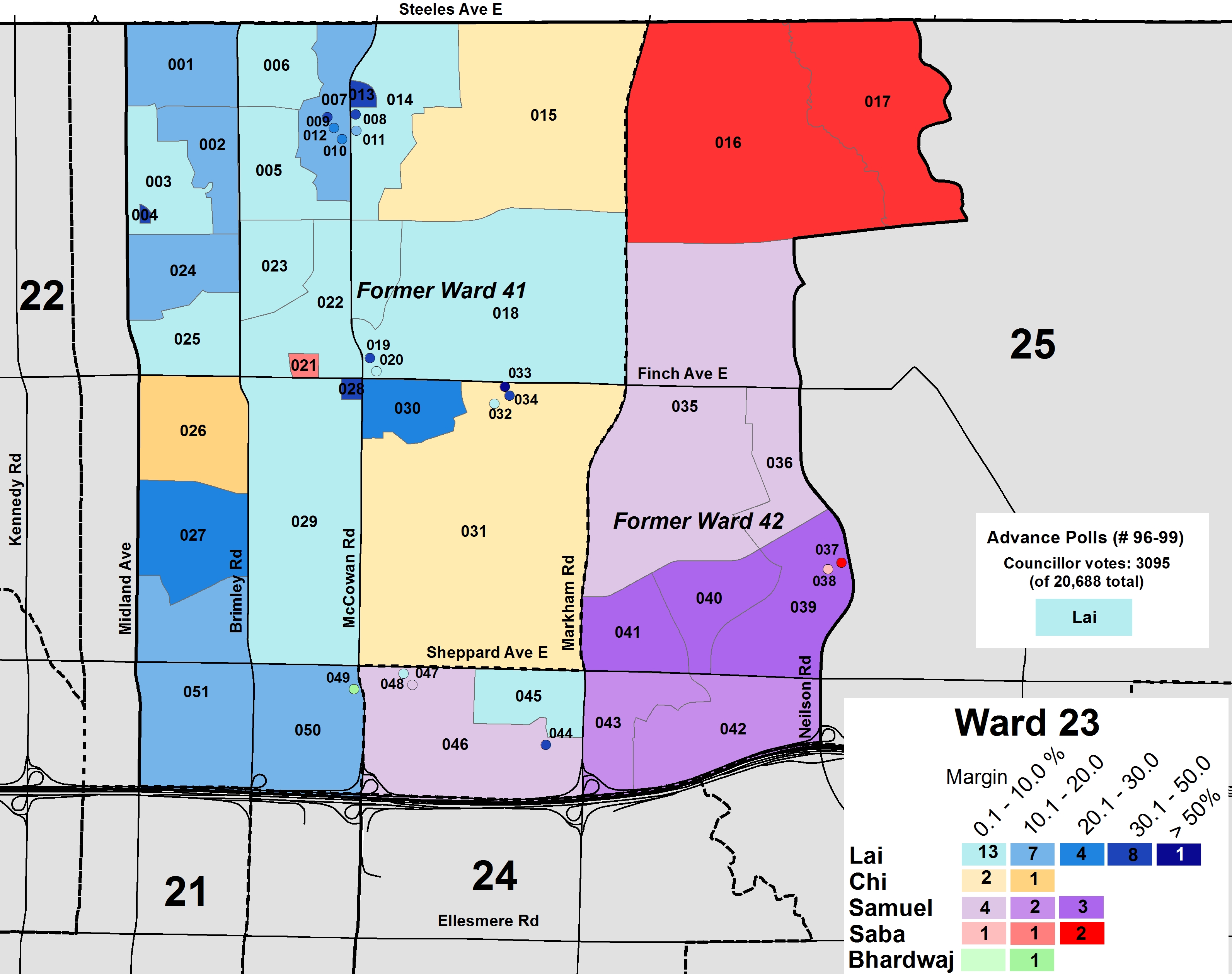
    In 2018, Lai won, getting 27.0 percent of the vote in a crowded field of eleven candidates. Chi placed second, with 20.0 percent of the vote. Samuel came in third. Lai and Chi did best in the northwestern part of the ward, where a large segment of the population identifies as Chinese-Canadian. Samuel did well in former Ward 42, especially in Malvern. Maggie Chi placed first in only three polls, but she was the second-place candidate in most polls that picked Cynthia Lai.

    I was expecting to see Felicia Samuel do better because of her impressive run for provincial office in the same area. That was a bit of a disappointment.

    2018 Election - W23Poll-level map for Ward 23


    Full Results

    Ward 22 Scarborough-Agincourt
    Candidate Total votes Percentage
    Jude Coutinho 234 0.9
    Jim Karygiannis 12593 46.8
    Norm Kelly 9944 37.0
    Michael Korzeniewski 660 2.5
    Roland Lin 2789 10.4
    Vincent Lee 597 2.2
    Jason Woychesko 90 0.3
    Ward 23 – Scarborough North
    Candidate Total Votes Percentage
    Ashwani Bhardwaj 1259 6.1
    Maggie Chi 4137 20.0
    James Chow 1487 7.2
    Dameon Halstead 391 1.9
    Anthony Internicola 254 1.2
    Sheraz Khan 453 2.2
    Cynthia Lai 5589 27.0
    Mahboob Mian 335 1.6
    Neethan Saba 2808 13.6
    Felicia Samuel 3702 17.9
    Sandeep Srivastava 273 1.3
  • Mapping the council race in Ward 25, Scarborough-Rouge Park

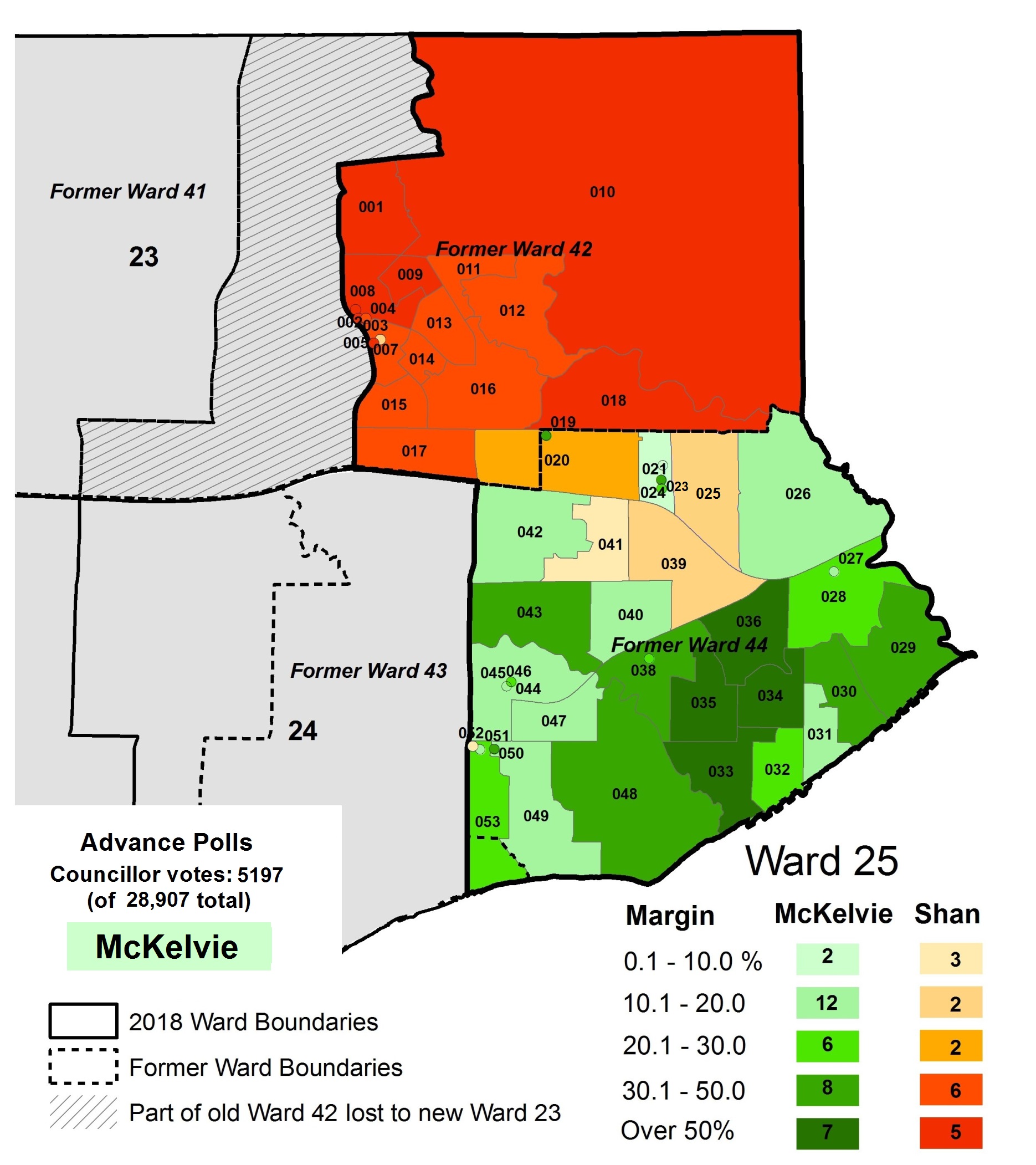
    2018-election-w25-e1541864142688

    I start my analysis of the 25 council races with Ward 25, Scarborough–Rouge Park, where Neethan Shan, the incumbent councillor for old Ward 42, lost in a very tight race to Jennifer McKelvie, who was elected to public office for the first time. Both candidates originally ran in different areas under the approved 47 wards (Shan in Ward 45, McKelvie in Ward 47), but Bill 5, Premier Doug Ford’s legislation that reduced Toronto City Council to just 25 wards, changed everything.

    Ward 25 was an interesting race for several reasons. It was one of only two contests in which an incumbent councillor lost to a non-incumbent challenger (the other was Ward 8 Eglinton–Lawrence, where Mike Colle defeated Christin Carmichael Greb). It was also the closest of the 25 council races. McKelvie won with 11,624 votes (40.2 percent), just 154 more votes than Shan. The win margin was just 0.53 percent. There were eleven candidates in total.

    The new ward boundaries imposed by the provincial government likely helped McKelvie win. The western part of old Ward 42, areas where Shan would have enjoyed the incumbency advantage, shifted to new Ward 23. Meanwhile, almost the entirety of old Ward 44, where McKelvie made a strong showing in the 2014 election, was incorporated in the new ward. The map above shows that Shan came in first place in every poll that formerly in Ward 42, while McKelvie placed first in nearly every poll south of Highway 401.

    Ward 25 Scarborough-Rouge Park
    Candidate Total Votes Percentage
    Amanda Cain 831 2.9
    Paul Cookson 1897 6.6
    Daniel Cubellis 527 1.8
    Jasper Ghori 337 1.2
    Reza Khoshdel 548 1.9
    Cheryl Lewis-Thurab 638 2.2
    Dave Madder 151 0.5
    Jennifer McKelvie 11624 40.2
    Christopher Riley 456 1.6
    Neethan Shan 11470 39.7
    Joseph Thomas 428 1.5

    (more…)

  • Why closing Toronto’s public golf courses is a boon to the public

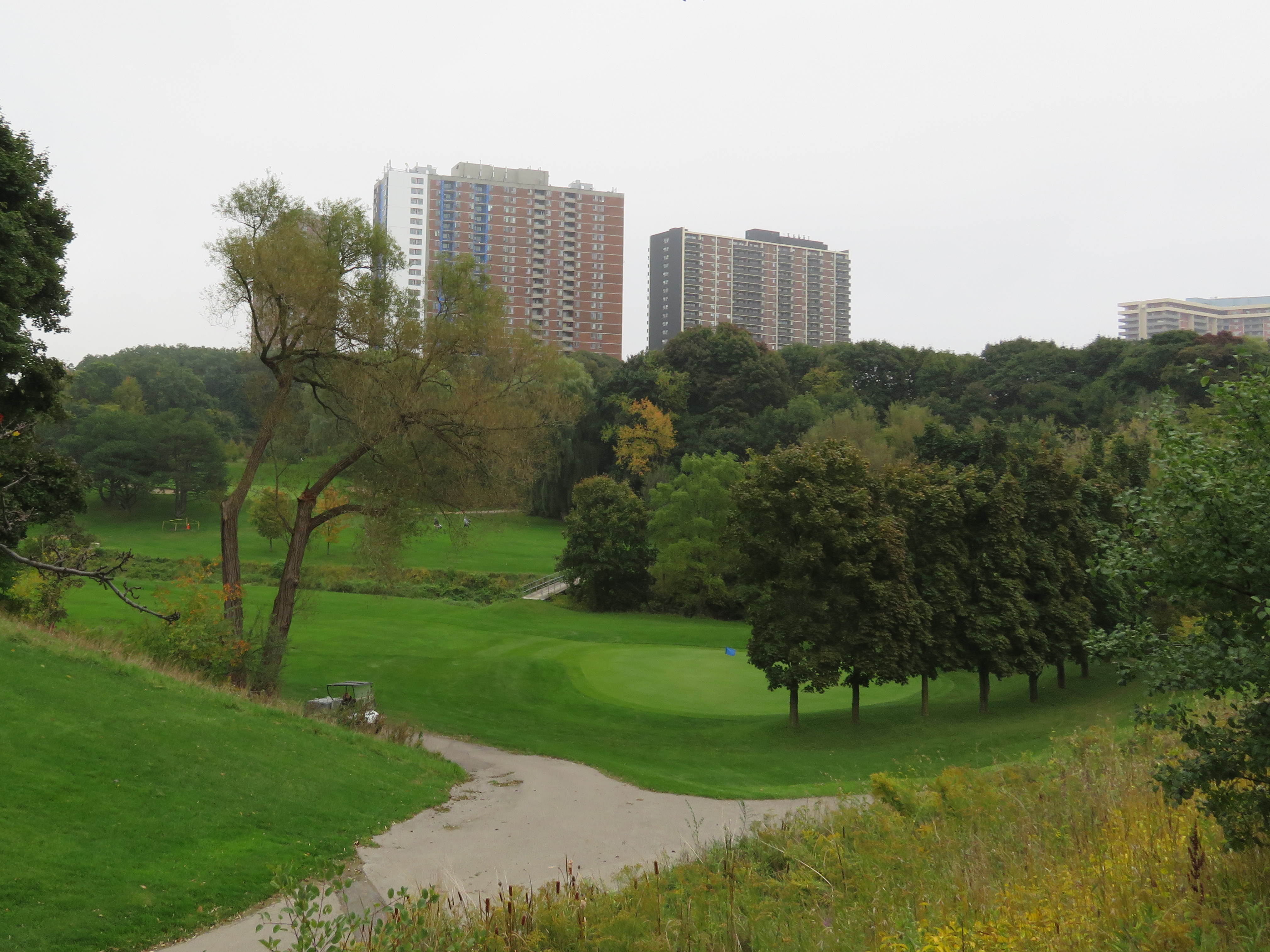
    IMG_8013-001.JPGDentonia Park Golf Course

    Yesterday, Thanksgiving Monday, mayoral candidate Jennifer Keesmaat proposed closing three of Toronto’s five municipally-owned golf courses. Keesmaat, Toronto’s previous chief planner, pointed out that the municipal golf courses operate at a loss, and that $10 million is allocated for improvements to those three courses. Furthermore, she intends to consult the local communities to best re-program the sites to address local wants and needs for the opened-up greenspace.

    The three courses are:

    • Dentonia Park Golf Course, located on Victoria Park Avenue north of Danforth Avenue, next to Victoria Park subway station, in the Massey Creek ravine.
    • Don Valley Golf Course, located in the West Don Valley near Yonge Street and Wilson Avenue, near York Mills Station. It extends under Highway 401.
    • Scarlett Woods Golf Course, located near Eglinton Avenue and Scarlett Road on the Humber River.

    Tam O’Shanter Golf Course, near Sheppard Avenue and Kennedy Road in Scarborough, and the Humber Valley Golf Course in north Etobicoke, are not mentioned in Keesmaat’s proposal.

    I’m very happy that Keesmaat has put forward this bold idea. Despite the municipal ownership of these lands, they are fenced off from residents. For example, Dentonia Park is located in a lower income neighbourhood made of many high-rise rental buildings. As Toronto continues to grow in population, greenspace reserved for golfers could be put to better uses such as sports fields (soccer and cricket, especially), playgrounds, natural wetlands and woodlands, and public paths.

    Golf is an expensive leisure activity with a large environmental footprint: the tending of golf courses require lots of water and pesticides. (Golf courses are exempted from a provincial ban on certain types of pesticides.) They may not adequately address the local community’s needs either, especially in lower income areas. Interest in playing golf is waning in North America as well. It makes sense to open up these publicly owned lands.

    Golf courses get in the way of potential linear parks. As I mentioned before, the Don Valley Golf Course blocks access to Earl Bales Park from the south. Opening up the grounds to the general public would provide a continuous path from York Mills Station to Bathurst and Sheppard and beyond. This would provide a safe and pleasant walking and cycling route across Highway 401, compared to the unpleasant and dangerous crossings at the interchanges with Yonge Street and Avenue Road.

    Dentonia Park Golf Course sits in between the path through Warden Woods and the Taylor Creek Ravine. If opened to the public, there could be a car-free path for pedestrians and cyclists all the way from Warden and St. Clair Avenues all the way downtown via the Don Valley trail system.

    Keesmaat’s plan to close money-losing, poorly-used golf courses is a great idea, much like her promise not to go ahead with the costly replacement of the eastern section of the Gardiner Expressway, instead going with the locally preferred boulevard option. Both of these ideas may not be popular with some, but they are both fiscally and environmentally sound.

  • Major improvements are coming to Scarborough’s waterfront

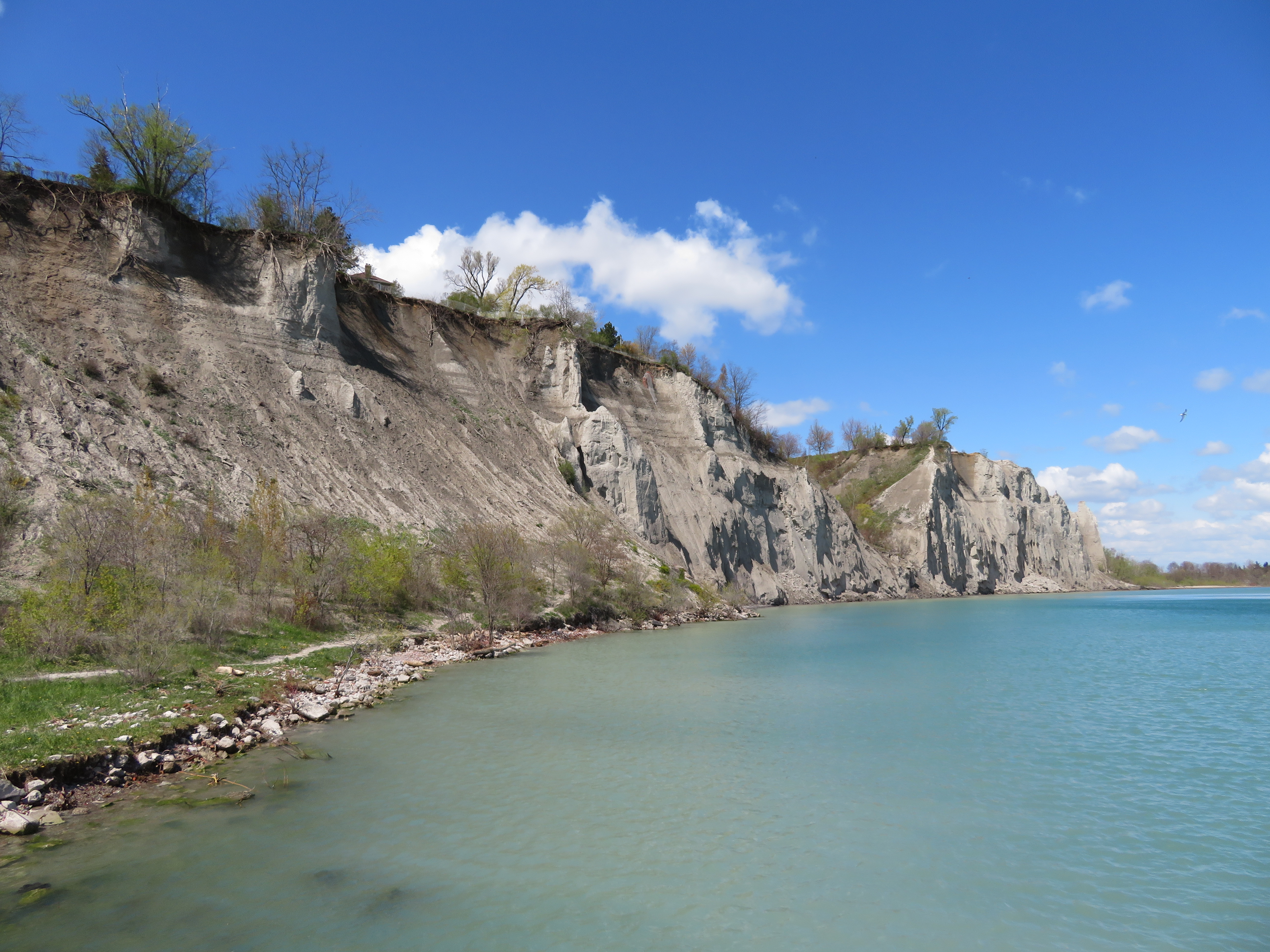
    IMG_8897-001The Scarborough Bluffs will soon become more accessible
    Over the last few years, the Toronto and Region Conservation Authority (TRCA) has been working on an environmental assessment for improvements to much of the Lake Ontario shoreline in Scarborough. Today, the TRCA announced that assessment is now complete, and it calls for major improvements between Bluffer’s Park and East Point Park.

    A new multi-use trail is planned for the bottom of the Scarborough Bluffs, with access points at Bluffer’s Park, the Doris McCarthy Trail, Guild Park, and East Point Park, connecting with the existing path across Highland Creek and the Rouge River to Pickering. In addition, pedestrian and cyclist access down to Bluffer’s Park on Brimley Road will be greatly improved.

    When my partner and I tried to walk along the Scarborough Waterfront in 2016, we found the Waterfront Trail lacking, and the section along Brimley Road quite dangerous. These changes, along with the new seasonal TTC bus service to Bluffer’s Park, will help to make Scarborough’s wonderful waterfront safer and easier to access. 

    The plan also calls for improved erosion control measures, along with interventions to improve land and aquatic habitats, helping to protect one of Toronto’s most spectacular natural features while protecting the natural environment.

    If you were looking for some good news in Toronto, especially with the many recent stories of violence on our streets, this is it.

  • The wrong answer to a tragic death of a boy walking home from school

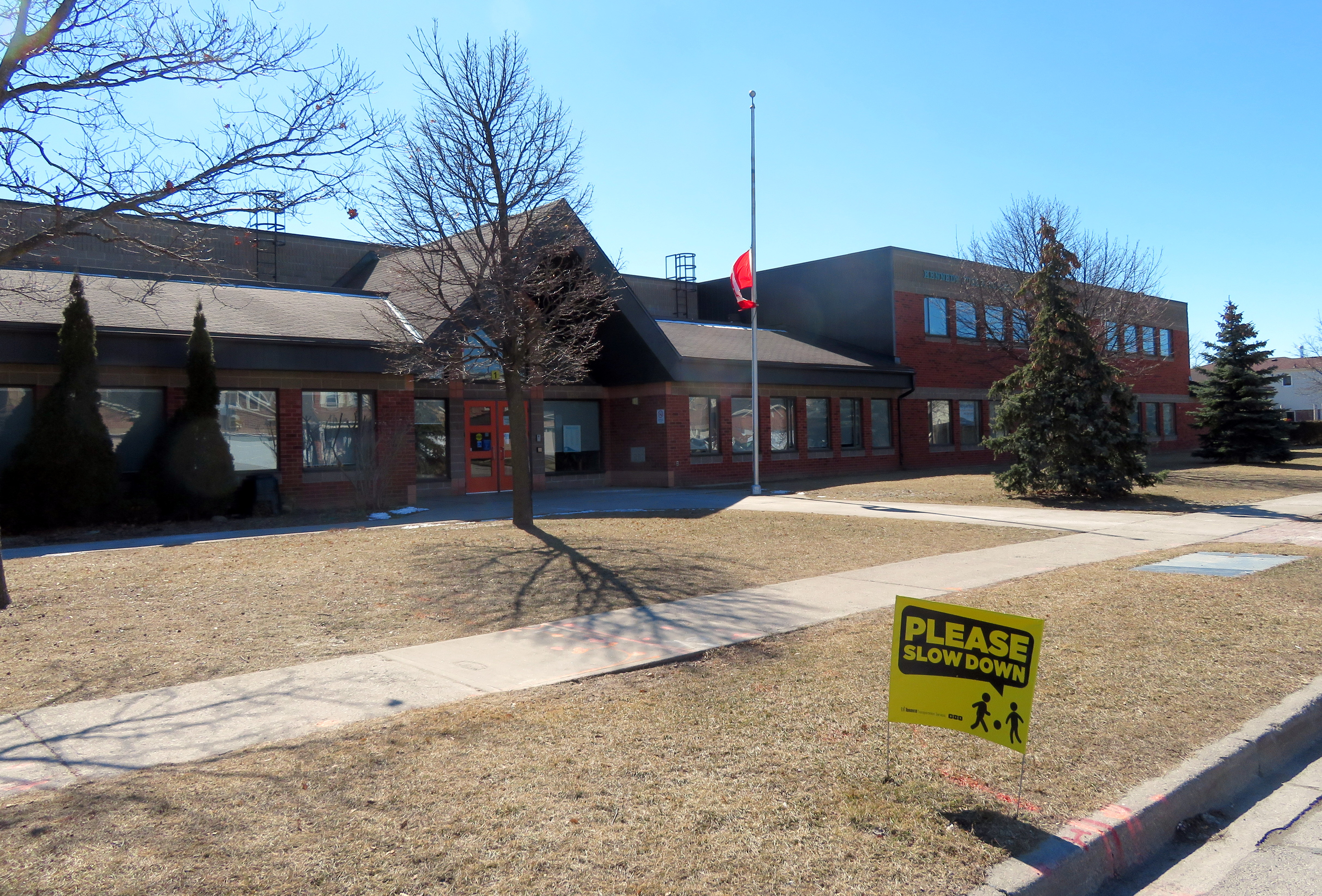
    IMG_6001-001.JPGKennedy Public School, where 11-year old Duncan Xu was in Grade 6. He was struck and killed on an adjacent residential street while walking home on Tuesday, February 27. 

    On Tuesday, February 27, around 3:30 PM, Duncan Xu, an 11-year old boy, was struck and killed by a motorist in a residential neighbourhood in north Scarborough. He was the tenth pedestrian killed on Toronto’s streets in 2018, and the second child killed on their way home from school.

    Duncan Xu was crossing Canongate Trail at Ockwell Manor Drive, near the school, when he was hit by a motorist driving north on Canongate. The intersection does not have a crosswalk, but is only 70 metres north of an intersection controlled by a four-way stop. Canongate Trail a residential street lined with houses, and has a 40 km/h speed limit. The collision occurred right in front of a school zone sign.  Despite its residential nature, Canongate Trail acts as shortcut for non-local traffic avoiding the busy intersection of Steeles Avenue and Kennedy Road.

    I visited the neighbourhood today to better understand the conditions in which a child is killed crossing the street on his way home to school, and the local councillor’s “solution” to that problem.


    Map of the neighbourhood surrounding Kennedy Public School, including the location where Duncan Xu was hit, and the walkway that will close on Monday morning.

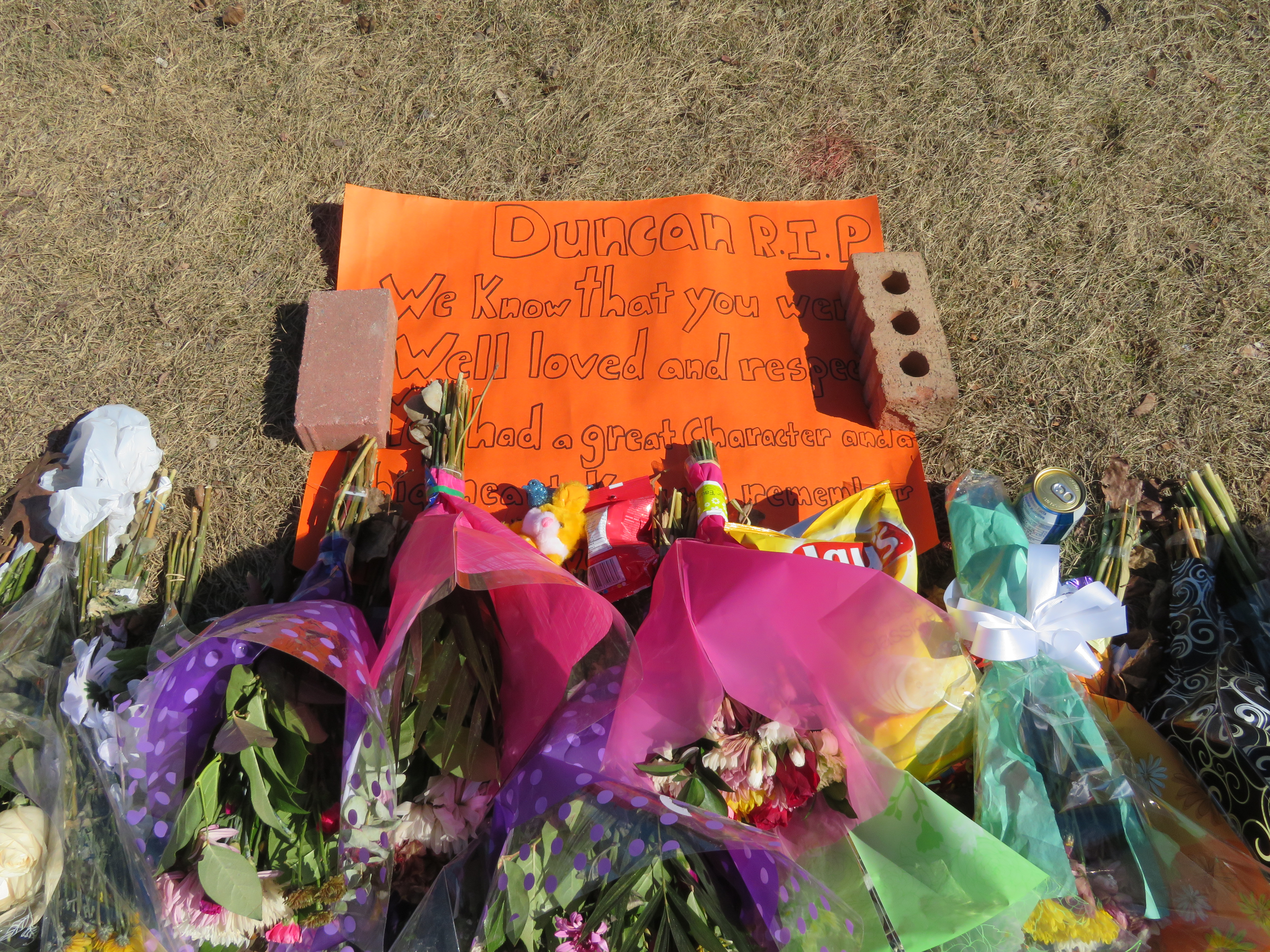
    IMG_6027-001Looking north on Canongate Trail at Ockwell Manor Drive, where Duncan Xu was killed. A memorial is at the curb. Note the speed limit sign, as well as the school zone sign, and also the heavy traffic on Canongate. 

    In the Toronto Star, school principal Kevin Liu described the traffic on Canongate as a problem: “I think we’re getting some thorough traffic, not necessarily residents, cutting through this neighbourhood to avoid a left-hand turn at Kennedy and Steeles during rush hours.”

    The school has long had concerns about their students’ safety.  Initiatives implemented in 2017 included new turning restrictions onto Elmfield Crescent, onto which the school fronts, and parking and stopping restrictions to better manage traffic from parents dropping off and picking up their children. A crossing guard is stationed at the corner of Canongate and Elmfield.

    Canongate is wide as far as local residential streets go. There are no attempts at traffic calming, such as speed humps, bump-outs or curb extensions, or effective traffic enforcement. There are several all-way stop signs on Canongate, but these on their own are not effective in slowing down motor traffic; rolling stops are common as well. When I visited the area today, I found that motorists accelerate quickly headed northbound from the Percell Square/Canongate intersection, and the 40 km/h speed limit is often not adhered to.

    Speeding motorist passes memorial to Duncan Xu on Sunday, March 4

    Sadly, the local councillor, Jim Karygiannis (Ward 39), has not championed measures to reduce and slow down traffic on Canongate Drive, despite local concerns. Instead, the councillor decided to unilaterally close a walkway linking the rear schoolyard with Canongate Trail, close to where Duncan was killed. Duncan used the walkway before trying to cross the street.

    Duncan Xu might not have crossed the street at a crosswalk, but he would still be alive had all motorists driven with the due care and speed befitting a school zone as children are heading home.

    The walkway is a convenient route for students to walk to school. It also connects residents to a nearby park. Councillor Karygiannis claimed that he proposed it earlier, but that local residents and the school refused it. Principal Liu said that he never heard about the proposal.

    The walkway Councillor Karygiannis will unilaterally close on Monday morning after Duncan Xu’s death

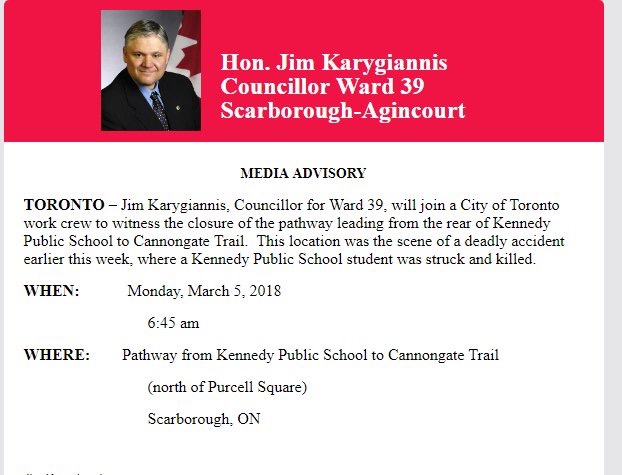
    On Monday morning, Councillor Karygiannis will make a show of closing the path and put out a media advisory indicating his intent. Orange plastic netting was already placed at both entries to the path, which cuts between two houses in preparation of the closure. But this is a classic case of “Zero Vision,” rather than Vision Zero, measures to improve road safety, such as improved pedestrian and cycling infrastructure and re-engineered roads that the city is at least nominally committed to.

    Councillor Jim Karygiannis media advisory

    Media advisory from Ward 39 Councillor Jim Karygiannis’ office announcing the closure of the pathway

    Closing the walkway will only serve to reduce walking to school, and increase traffic. It will do nothing to solve the problem of fast-moving cars in a residential area, nor will it necessarily prevent children from unsafely crossing the street. It’s the type of inexpensive, easy fix that make politicians look like they’re doing something, but without making the necessary changes to prevent future fatalities.

    Traffic calming measures, such as speed humps, tighter curbs at intersections, extending the curbs out at intersections, and planters would force motorists to slow down, and would be more effective than stop signs. More should be done to discourage impatient drivers from using the residential area as a shortcut. More should be done to encourage students to walk to school, rather than discouraged by closing walkways. Walking audits would allow the community to provide input. And this should be done around every school.

    The safety of pedestrians, especially children, should not be left to half-measures.

    IMG_6036-001

    Updated map of pedestrian fatalities on Toronto’s streets.

  • Toronto’s Zero Vision and the folly of Seniors Safety Zones

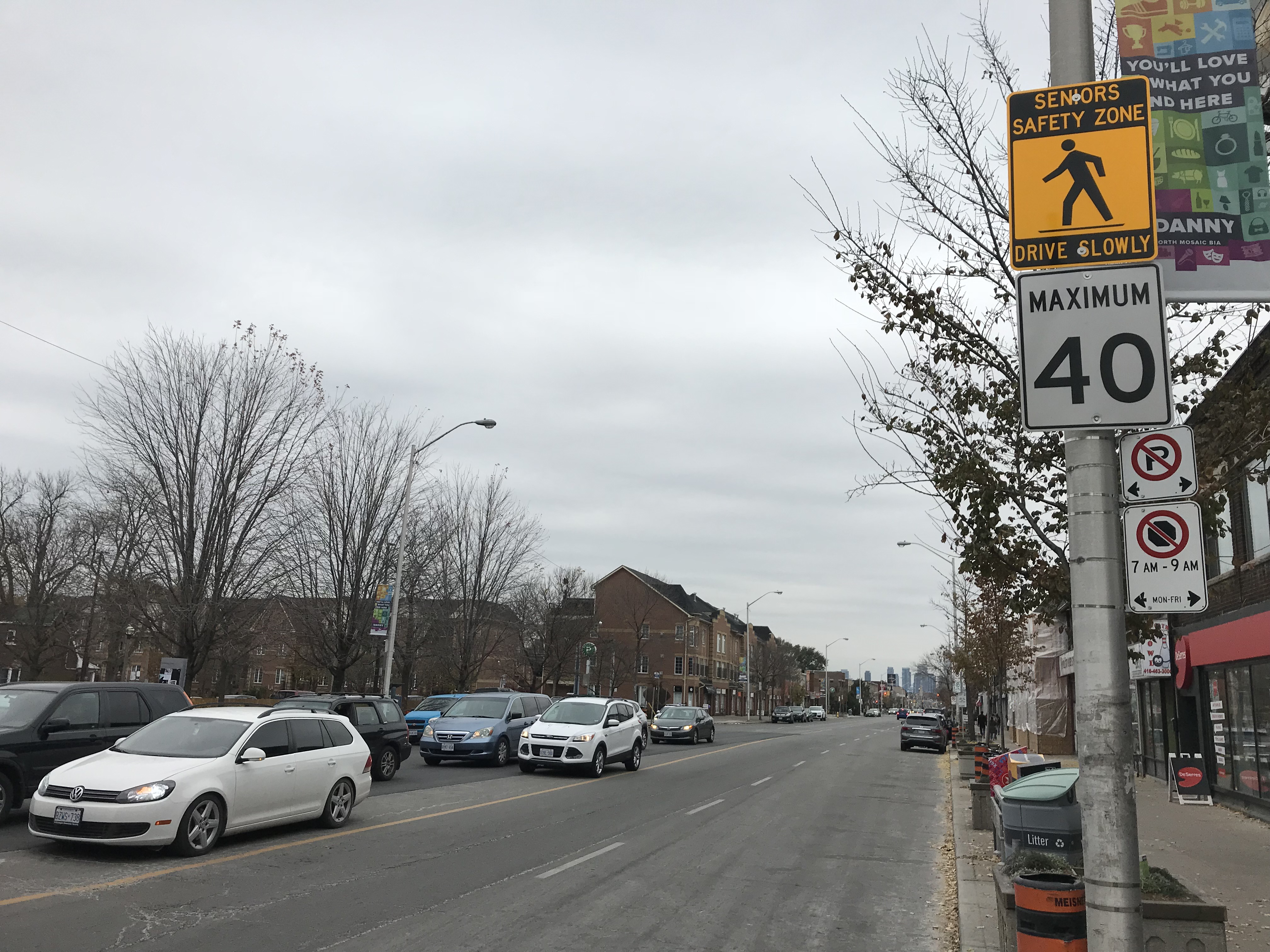
    IMG_4386-001Eglinton Avenue East near Brimley Road, one of twelve Seniors Safety Zones in the City of Toronto
    Despite its status as a global city, a city that’s often ranked as one of the world’s safest, a city that likes to think of itself as both progressive and a top place to do business, Toronto does a lousy job of protecting its residents from injury and death on its roads.

    Although there have been a few positive steps — the new King Street Pilot, launched last week, or the Bloor Street bike lanes, made permanent between Avenue Road and Shaw Street in October — Toronto does far too little to protect pedestrians and cyclists in this city. The installation of sidewalks in residential neighbourhoods are often opposed by local residents resistant to losing driveway space on which to park their cars, or unhappy about having to clear sidewalks of snow and ice. Affluent neighbourhoods might be dotted with “drive slow – kids at play”  lawn signs, but their residents and elected representatives will oppose new bike lanes and lower speed limits on the arterial roads they use to commute downtown.

    The general idea of reducing road violence is a popular one. But specific actions are often opposed. The city’s own Vision Zero strategy — weak as it is — is a good indication of the ambivalence to road safety we have in this city.

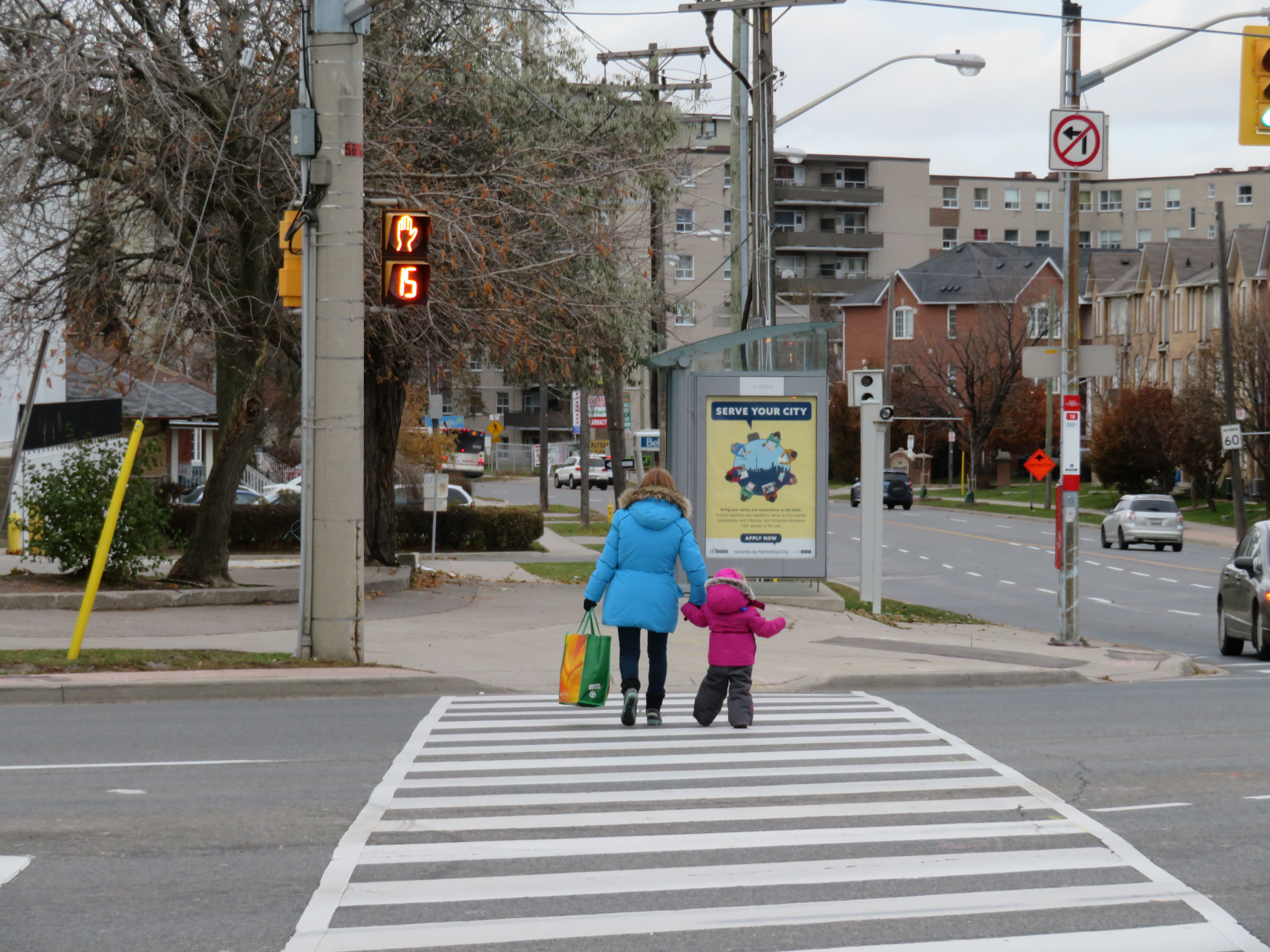
    IMG_4403-001Woman and young child cross seven lanes of traffic at a crosswalk at Eglinton Avenue East and Danforth Road
    Vision Zero, which originated in Sweden, is the road safety philosophy that no loss of life is acceptable, and that all road users are human, that humans make mistakes, and road design must minimize the impacts of those mistakes. Complete streets that accommodate all road users (pedestrians, cyclists, motorists, and transit users), and road engineering measures to protect pedestrians and cyclists and reduce traffic speeds are in the spirit of Vision Zero.

    But when Mayor John Tory and Public Works and Infrastructure Committee Chair Jaye Robinson (Councillor, Ward 25) originally announced the city’s Vision Zero plan in June 2016, it merely aimed to reduce serious collisions involving pedestrians and cyclists by 20 per cent over a ten year period, allocating $68.1 million over five years.  The plan itself was modest. After a social media backlash and criticisms from active transportation activists (including Walk Toronto, of which I am a co-founder and a steering Committee member), the plan was revised, with an additional $10 million allocated and the goal to eliminate serious collisions, rather than simply reduce that number.

    One of the specific measures in the city’s Vision Zero plan is the creation of seniors safety zones, areas with high volumes of older adult pedestrians and higher risk of collision. Older adults make up a majority of pedestrian deaths in Toronto; 37 of the 43 pedestrians killed  in 2016 were over the age of 55. According to the City of Toronto’s Vision Zero Road Safety Plan, seniors safety zones will feature changes intended to improve pedestrian safety, such as lower speed limits, improved street lighting, advanced and extended walk signals at signalized intersections, red light cameras and radar speed signs, improved sidewalks and additional crosswalks, and increased enforcement.

    Twelve seniors safety zones were designated across the entire city of Toronto. Five are in the old City of Toronto, including Dundas Street at Bloor, Dundas at College/Lansdowne, and Dundas at Spadina. Six are in Scarborough, and one is in North York.

    IMG_0643
    Senior Safety Zone sign and 40 km/h speed limit, Danforth Avenue at Coxwell

    On Danforth Avenue, two senior safety zones were identified: near Coxwell Avenue and near Main Street. The speed limit on Danforth Avenue was reduced from 50 km/h to 40 km/h in 2016, but few other visible changes are apparent. Danforth Avenue is a five lane street, including a centre lane for left turns, and is paralleled by a subway line. The curb lanes on Danforth are unusually wide, and are used for parking outside of weekday rush hours. There are no bike lanes on Danforth either.

    Despite the 40 km/h speed limit, the wide lanes, dedicated turning lanes, and the absence of daytime local transit promote high speeds. The design speed of Danforth is simply too high; simply reducing the speed limit and putting up “senior safety zone” signs will do far too little.

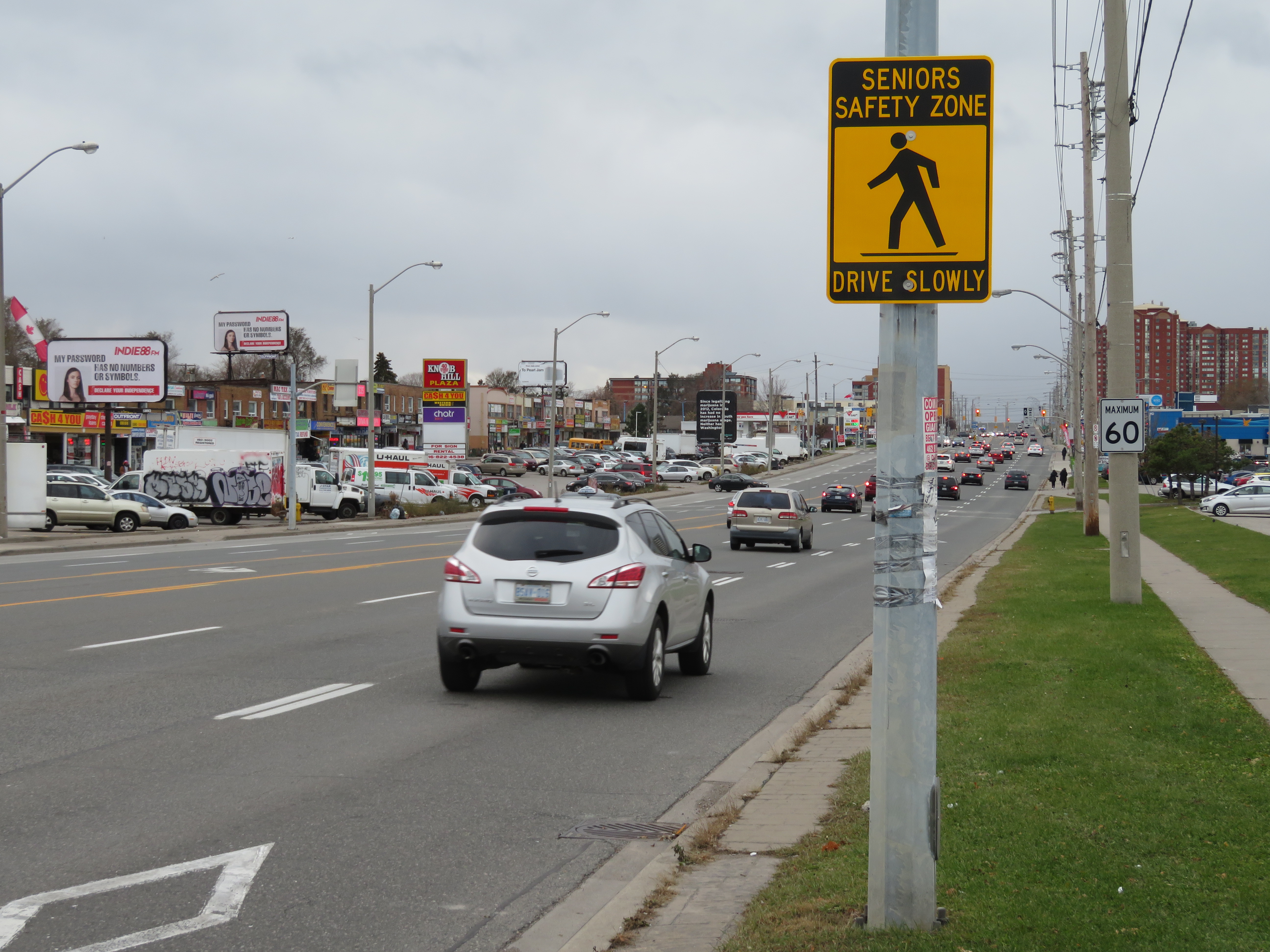
    IMG_4396-001Seniors Safety Zone sign on Eglinton Avenue East, at Brimley Road. Note the 60 km/h speed limit sign
    Eglinton Avenue East, between Midland Avenue and Danforth Road in Scarborough, is another senior safety zone. Two pedestrians were killed on this stretch of road in 2016.

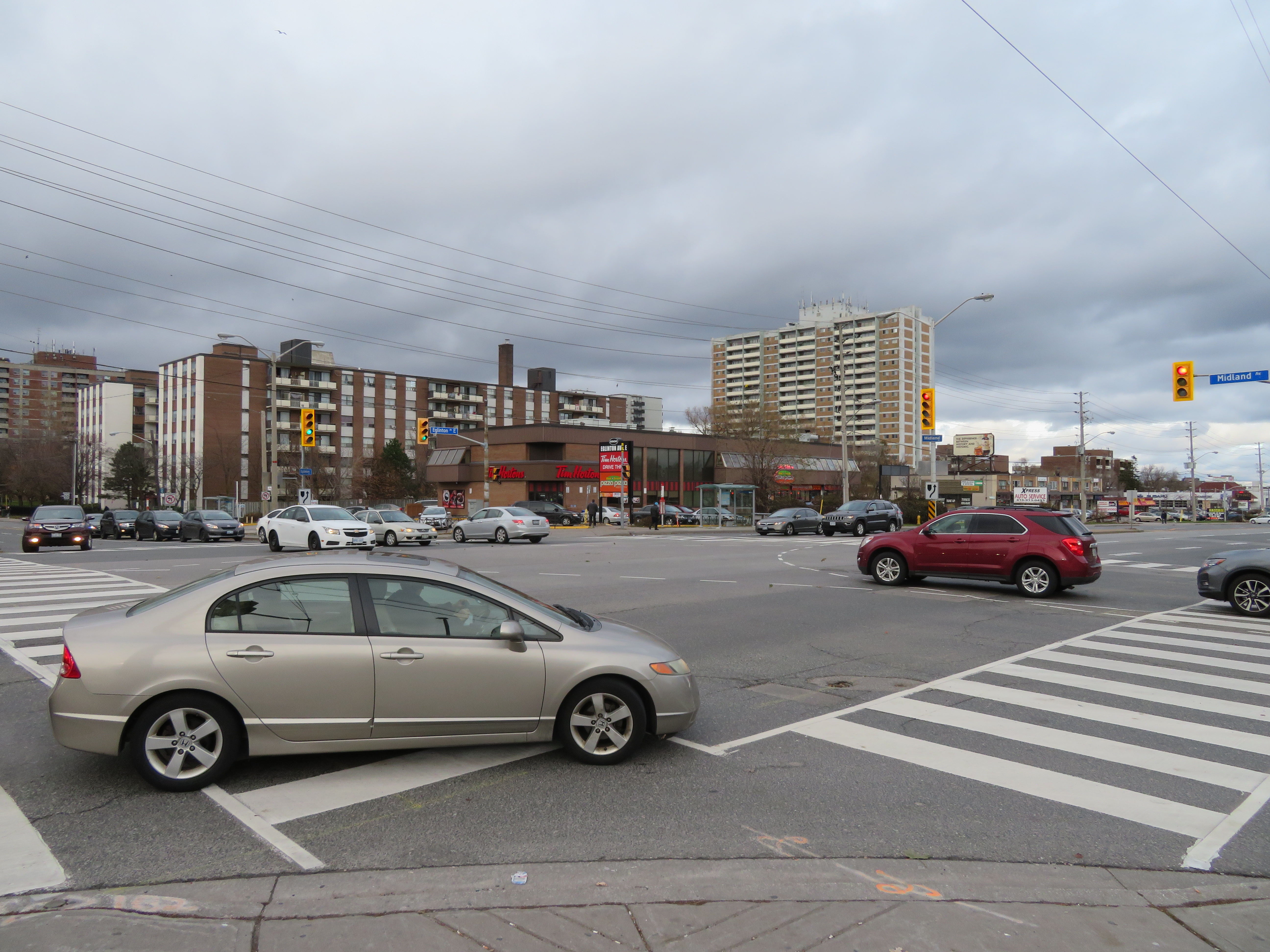
    Eglinton Avenue through Scarborough is seven lanes wide, including a centre left-turn lane to cross streets and commercial properties that line the wide street. Traffic signals  are typically 500 metres apart; many TTC bus stops on Eglinton Avenue East are located far from a designated crosswalk. Buses are frequent between Midland and Brimley; four frequent routes feed into the Kennedy subway station to the west. Again, there is no cycling infrastructure to be found.

    The senior safety zone here is a joke. Not one safety intervention was made here. The yellow-and-black safety zone signs that read “drive slowly” are merely advisory, and do not stand out among other traffic  and commercial signage. The 60 km/h speed limit was not changed, and intersections were not altered at all to improve pedestrian safety.

    IMG_4374-001At Eglinton and Midland Avenues, wide curb radii encourage speedy right turns into crosswalks; many drivers do not stop at the red light before making a right turn
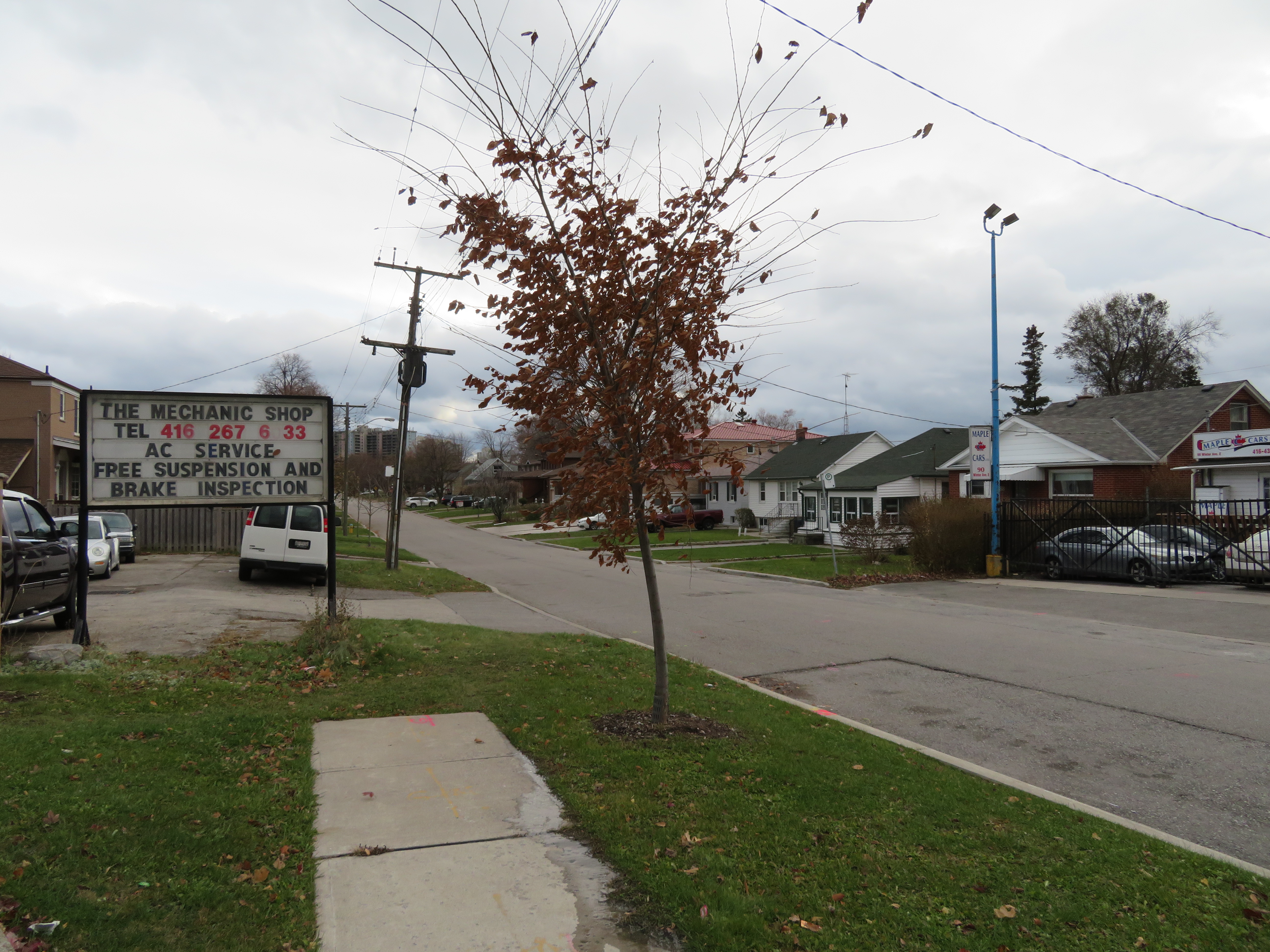
    Several residential side streets off of Eglinton, such as Winter Avenue, do not even feature sidewalks. The signs might say “seniors safety zone” but there is no evidence that pedestrian safety is taken seriously at all here.

    IMG_4379-001
    Winter Avenue’s sidewalks disappear a mere 50 metres south of Eglinton Avenue

    Physical interventions, such as narrower lanes (which could make room for cycling infrastructure and/or wider sidewalks), bump-outs at crosswalks to improve pedestrian visibility and slow down right-turning vehicles, would be more effective. Police enforcement, or speed radar cameras, would be an additional deterrent against dangerous driving.

    At least the city has taken notice of the unacceptable numbers of pedestrians and cyclists killed in Toronto, but simply putting up new speed limit and safety zone signs are not enough. Without road engineering works to slow traffic down, and without effective police enforcement against speeding and drivers’ failures to obey traffic signs and yield the right of way to pedestrians, we only get feel-good measures and ineffective signs. A real commitment to Vision Zero requires political will, which so far is lacking at City Hall. Instead, we get zero vision.

  • Wandering the Waterfront Trail in Scarborough

    IMG_8897-001At the bottom of the Scarborough Bluffs, west of Bluffer’s Park

    Lake Ontario, like all five of the Great Lakes, is more a freshwater sea than merely a lake. It’s over three hundred kilometres long, from Hamilton to Kingston, bordering two countries, with several inhabited islands, and features a varied and fascinating landscape. Lake Ontario’s vastness is best appreciated from its shore, whether it be the Toronto Islands, on the east side, on the beaches at Presqu’ile or Sandbanks Provincial Parks, or from the top of the Scarborough Bluffs.

    The Waterfront Trail, at least in theory, is a wonderful way to explore these varied shorelines of Ontario’s vast Great Lakes on foot or by bicycle. Founded in 1995, the trail now extends from the Quebec border, west along the St. Lawrence River, through Niagara, along the north shore of Lake Erie, and up the Detroit and St. Clair Rivers to Lake Huron. I cycle the Waterfront Trail between Toronto and Hamilton several times a year, an 85-kilometre trip. GO Transit’s trains and buses follow the Waterfront Trail from Durham Region to the Niagara River, making it easy to walk or cycle one-way, returning by train and/or bus.

    IMG_0834-001.JPG
    The Waterfront Trail crosses Highland Creek in eastern Scarborough. (2015 photo)

    But the Waterfront Trail is dependent on municipal infrastructure, or the lack of it. Most of the trail’s route winds through rural areas, following country roads and highways where segregated multi-use trails aren’t built: in many places, the Waterfront Trail is neither close to the water, nor is it a ‘trail’ of any kind. At least in Northumberland County and Niagara Region, paved shoulders and bike lanes are found along the busier country roads. But this is not always the case.

    In urban areas, though, like the City of Toronto, there is both the demand and the resources for safe pedestrian and cycling infrastructure along the waterfront. In the old city of Toronto, the Waterfront Trail follows the Martin Goodman Trail, and is nearly completely segregated from motor traffic.

    But in Etobicoke and in Scarborough, much of the trail is routed via on-street sections; in sections, pedestrians must follow sidewalks next to busy sections of Lake Shore Boulevard and Kingston Road; for cyclists, there aren’t even any bike lanes — they have the choice of either riding with traffic, or illegally riding on the sidewalks.


    Route of the Waterfront Trail within the City of Toronto

    (more…)

  • A new low for the Scarborough Subway champion

    Note: a version of this article has been cross-posted to Spacing Toronto

    For 2016’s annual Torontoist Heroes and Villains feature, I nominated Toronto Councillor Glenn De Baeremaeker (Ward 38, Scarborough Centre) as villain of the year. (“Pedestrian blaming” won that dubious honour.) But I remain proud of my choice. As I wrote back in December:

    De Baeremaeker’s record of environmentalism has been overshadowed by an increasingly antagonistic tone, pitting supposedly downtrodden Scarborough against the rest of the city in his one-track quest to build a one-stop subway extension to his ward. In his myopic support of the subway, De Baeremaeker is opportunistic and vindictive, takes the low road, insults critics who engage in good faith debates, and in the process does a disservice to the community he represents.

    Councillor De Baeremaeker hasn’t changed his tone.

    Yesterday, May 10, the City of Toronto held a public consultation at Scarborough Civic Centre on the next phase of planning for that one-stop, 6.2-kilometre subway extension, which is estimated to cost $3.35 billion, and open no earlier than 2026.

    I wish I was able to attend last night’s meeting, as disgruntled Scarborough residents questioned the merits of that transit plan. And Councillor De Baeremaeker shamelessly blamed “downtown councillors” for the shortcomings of that one-stop subway. For a councillor who is rightly proud of his past environmental advocacy, it was surely a low point.

    Toronto Star reporter Jennifer Pagliaro, an excellent local journalist, covered the meeting. 

    City Scarborough MapCity of Toronto map from February 2016 illustrating current plans for the Scarborough Subway and connecting transit.

    At the public consultation, TTC and City planning staff answered queries from members of the public, many questioning the utility of the single-stop subway. There are no additional funds to rough in future stations, such as at McCowan Road and Lawrence Avenue, where the line would intersect the busy 54 Lawrence East bus and serve Scarborough General Hospital. As building future stations later would require an extended shut-down of the line, the one-stop subway extension will likely be forever a one-stop subway.

    (The eastern extension of the Eglinton-Crosstown LRT from Kennedy Station to University of Toronto’s Scarborough Campus is also part of the new plan for Scarborough, but the LRT component is unfunded.)

    Shameless as ever, Councillor De Baeremaeker resorted to strawman arguments, talking up a “suburban/urban divide”:

    [De Baeremaeker] blamed “downtown councillors,” who represent the most densely populated wards in the city, for not wanting to fund more frequent transit stops like their residents enjoy.

    Yes, it is true that all councillors representing central Toronto opposed the subway extension, but so did several suburban politicians, most notably Councillor Paul Ainslie (Ward 43 – Scarborough East). Yet not one of those councillors wanted less transit for Scarborough. Instead, they backed a seven-stop LRT replacement for the ageing Scarborough rapid transit line, including an extension to Centennial College and Sheppard Avenue in Malvern. That less-expensive line was fully funded by the provincial government, which would have permitted scarce funds to be spent on other transit projects across Toronto.

    Meanwhile Mayor John Tory was most interested in pushing SmartTrack, a fantasy rail project that got pared down as parts of the line were found to be impossible to build, and costs increased. The eastern end of SmartTrack conflicted with the Scarborough Subway extension. The three-stop subway plan was cut to a single stop at Scarborough Centre, to keep costs down and to not cannibalize SmartTrack.

    Yet Tory and De Baeremaeker are allies on the subway extension; Tory named him one of his Deputy Mayors to champion the line. But Tory’s push for his own project put him at odds with De Baeremaeker’s focus on the subway extension, any subway extension, to his ward.

    It is also worth noting that until 2012, De Baeremaeker supported Transit City, the transit plan championed by David Miller that would have delivered three new light rail lines to Scarborough.

    I am not surprised by De Baeremaeker’s shameless politics. But his performance last night was especially crass and dishonest. Backed into a corner, faced with angry local residents, he lashed out at imaginary villains. But subway backers largely have themselves to blame; despite winning every recent vote on the subway plan, they have only one stop to show for it.